Single Burner vs Double Burner Propane Forge
Quick answer
For most beginners doing knives and small work, a single-burner propane forge is the right first buy: it uses about half the gas, runs comfortably on a 20 lb tank, and costs less. Choose a double burner only if you need a long, even chamber or want easier forge welding.
The real question: how big is your steel?
Beginners usually frame this as "which forge is better," but burner count is not a quality ranking. It is a capacity and heat-input decision. A single burner puts roughly 80,000-110,000 BTU/hr into a small chamber. A double burner puts roughly 170,000-200,000 BTU/hr into a longer one. More burners is not "more forge" the way more horsepower is more car; it is a bigger heated zone that costs about twice as much gas to run.
The honest way to choose is to look at the steel you actually plan to heat. If your projects are knife blades, hooks, bottle openers, small tongs, and stock under about 8-10 inches at a time, a single burner heats it fully and evenly. If you want to work long bars, heat a wide section at once, or reach forge-welding heat without a fight, the extra burner earns its keep. Everything below follows from that one idea.
What each one actually does well
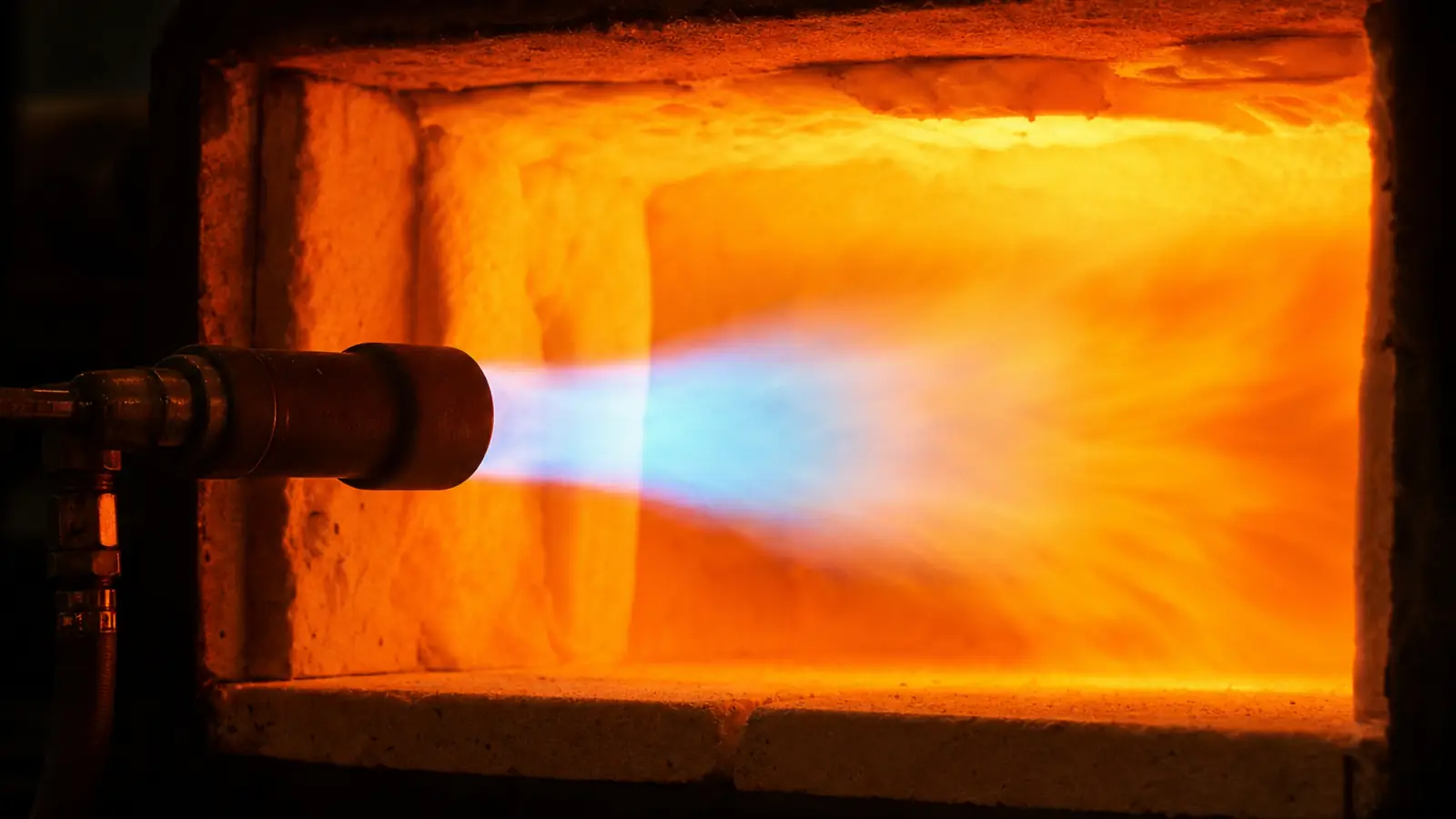
Single burner forges are compact, cheaper to buy, and easy to run. One burner means one thing to tune, so getting an even orange heat is simple. The catch is chamber length: heat is strongest right at the burner, so a long bar develops a hot spot in the middle and cooler ends. You work in shorter sections and move the steel more. Reaching bright welding heat (~2300F / 1260C) is possible in a tight single but it runs the burner hard.
Double burner forges spread two flames along a longer chamber, so a 12-inch bar heats far more evenly and you can soak a wide section at once. The higher total BTU reaches welding heat more readily, which matters for pattern-welded or damascus work. The downsides are simple math: about twice the propane per hour, a bigger and heavier body to heat up (longer warm-up), and real tank-freezing risk on a 20 lb bottle.
| Factor | Single burner | Double burner |
|---|---|---|
| Typical BTU/hr | ~80-110k | ~170-200k |
| Propane use | Lower per hour | ~2x the gas per hour |
| Tank you want | 20 lb OK | 30-40 lb to avoid freeze |
| Chamber / even heat | Short, hot spot at burner | Longer, more even |
| Best for | Knives, small stock | Long bars, forge welding |
Follow the gas: tank size and freeze-up
This is the detail that surprises new smiths. Propane vaporizes at a limited rate. A 20 lb tank at about 60F, half full, sustains roughly 80,000 BTU/hr before the tank frosts over and pressure drops; that limit roughly halves below freezing. A single burner sits right around that ceiling, so it runs fine on a 20 lb tank in mild weather. A double burner at ~180,000 BTU/hr overruns a 20 lb tank quickly, the tank ices up, your flame goes lazy and yellow, and heat falls off mid-session.
The fix for a double burner is a bigger tank: a 30 lb sustains about 105,000 BTU/hr and a 40 lb about 130,000 BTU/hr, giving vaporization headroom. Two smaller tanks joined with a manifold also work. If you already own a 20 lb grill tank and do not want to buy more gas hardware, that alone is a strong reason to start single. See propane tank sizes for forges for the full breakdown.
Forges worth a beginner's shortlist
Two honest starting points: a single burner for knives and small work, and a double burner if you know you want length and welding heat. The cards below pull current specs and links automatically.
Compact single-burner propane forge
14 x 8 x 8 in shell
- BTU/hr
- 90,000
- Burners
- 1
- Chamber (in)
- 9 x 4.5 x 3
- Weight
- 22 lb
- Regulator
- 0-20 PSI
- Firebrick
- Included
Good first forge for knives and small stock. Confirm the interior length fits your longest workpiece before buying.
Long single-burner knife forge
18 x 8 x 8 in shell
- BTU/hr
- 100,000
- Burners
- 1
- Chamber (in)
- 12 x 4.5 x 3
- Weight
- 27 lb
- Regulator
- 0-30 PSI
- Firebrick
- Included
Longer chamber suits blade work. Ships with a 0-30 PSI regulator on most listings - verify the range.
Economy single-burner forge
12 x 7 x 7 in shell
- BTU/hr
- 80,000
- Burners
- 1
- Chamber (in)
- 8 x 4 x 3
- Weight
- 18 lb
- Regulator
- 0-20 PSI
- Firebrick
- Included
Lowest-cost entry option. Interior is short - fine for hooks and small knives, tight for anything long.
Single-burner farrier-style forge (open ends)
15 x 8 x 8 in shell
- BTU/hr
- 95,000
- Burners
- 1
- Chamber (in)
- 10 x 5 x 3
- Weight
- 24 lb
- Regulator
- 0-20 PSI
- Firebrick
- Included
Open front and back let you pass long bar through. Open ends waste some heat - plan for a firebrick baffle.
Single-burner forge with front door
16 x 9 x 9 in shell
- BTU/hr
- 110,000
- Burners
- 1
- Chamber (in)
- 9 x 5 x 3.5
- Weight
- 26 lb
- Regulator
- 0-30 PSI
- Firebrick
- Included
Front door helps hold welding heat. Confirm whether a 0-30 PSI regulator is included for forge-welding pressure.
Standard double-burner propane forge
24 x 9 x 9 in shell
- BTU/hr
- 170,000
- Burners
- 2
- Chamber (in)
- 18 x 5 x 3.5
- Weight
- 34 lb
- Regulator
- 0-20 PSI
- Firebrick
- Included
All-round two-burner forge. Reaches welding heat but burns roughly twice the gas of a single burner.
Double-burner blade forge
26 x 9 x 9 in shell
- BTU/hr
- 180,000
- Burners
- 2
- Chamber (in)
- 20 x 5 x 3
- Weight
- 38 lb
- Regulator
- 0-30 PSI
- Firebrick
- Included
Long, low chamber aimed at blades and damascus billets. Verify the 0-30 PSI regulator for welding heat.
Large double-burner forge
26 x 10 x 10 in shell
- BTU/hr
- 200,000
- Burners
- 2
- Chamber (in)
- 19 x 6 x 4
- Weight
- 42 lb
- Regulator
- 0-30 PSI
- Firebrick
- Included
Big interior for tongs, hammers and heavier stock. Needs a 30 or 40 lb tank to avoid regulator freeze-up.
Double-burner forge (horizontal/vertical)
22 x 9 x 9 in shell
- BTU/hr
- 175,000
- Burners
- 2
- Chamber (in)
- 16 x 5.5 x 4
- Weight
- 40 lb
- Regulator
- 0-30 PSI
- Firebrick
- Included
Can stand vertically for hardening long blades. Vertical use changes heat pattern - read the manual.
Choose by what you'll make
Match the forge to your first year of projects, not your someday dreams.
- Knife maker on a budget: single burner. Blades are short, one burner heats them evenly, and you save on the forge and every tank of gas. See best propane forge for knife making.
- General beginner, small hardware and hooks: single burner. Cheaper to buy and feed while you learn hammer control.
- You want to forge weld / make damascus: double burner. The extra BTU reaches and holds welding heat with less struggle.
- Long bars, fireplace tools, larger stock: double burner for the longer even chamber.
- Cold-weather forging: lean single, or run a double off a 30-40 lb tank so vaporization keeps up.
Still deciding on your overall first forge? The best propane forge for beginners guide compares full models.
Common pitfalls before you buy
- Buying double to "future-proof." You pay for it on every session in gas and warm-up time. Most beginners outgrow skills faster than they outgrow a single burner.
- Running a double on a 20 lb tank. It freezes, and you will blame the forge for weak, yellow heat that is really a starving gas supply.
- Ignoring the regulator. Higher-BTU doubles want an adjustable 0-20 or 0-30 PSI regulator, not a fixed low-pressure grill regulator.
- Assuming more burners = hotter. A well-tuned single reaches forging heat fine. Doubles win on even coverage and length, not raw peak temperature on small stock.
- Forgetting the door/opening. A longer double loses more heat at the ends; pass-through openings need firebrick baffles to hold temperature and save gas.
Frequently asked questions
Is a single burner propane forge enough for a beginner?
Yes. For most beginners a single burner propane forge is enough for knives, hooks, small tongs, and general practice. One burner is easy to tune, runs on a common 20 lb tank, and uses about half the gas of a double. You only outgrow it if you start forge welding or working long bars regularly.
How many burners does a propane forge need for forge welding?
Forge welding is easier with a double burner because the combined ~170-200k BTU/hr reaches and holds bright welding heat (~2300F) more readily across a wider area. A single burner can weld small stock but works harder to get there. If damascus or pattern welding is your goal, lean toward two burners and a 30-40 lb tank.
Does a double burner propane forge use twice the propane?
Roughly, yes. A double burner runs about 170-200k BTU/hr versus 80-110k for a single, so it burns close to twice the propane per hour of forging. That also means it can overrun a 20 lb tank's vaporization limit and cause freeze-up, so plan on a 30 or 40 lb tank to keep gas flowing steadily.
Can I run a double burner forge on a 20 lb propane tank?
Short sessions in warm weather, sometimes. But a double burner's high BTU draw usually exceeds what a 20 lb tank vaporizes (about 80k BTU/hr at 60F, less when cold). The tank frosts, pressure drops, and heat fades. Use a 30-40 lb tank, or a two-tank manifold, so vaporization keeps up with the burners.
Is a single or double burner forge better for knife making?
For most knife makers, a single burner is better. Blades are short enough that one burner heats them evenly, and you save money on both the forge and every tank of gas. Choose a double only if you plan to forge weld damascus billets, where the extra heat input across a wider zone genuinely helps.
Last verified 2026-06. Specs, sizes and market prices change - confirm details on the retailer page before buying.