Forge Welding for Beginners: Flux and Borax
Quick answer
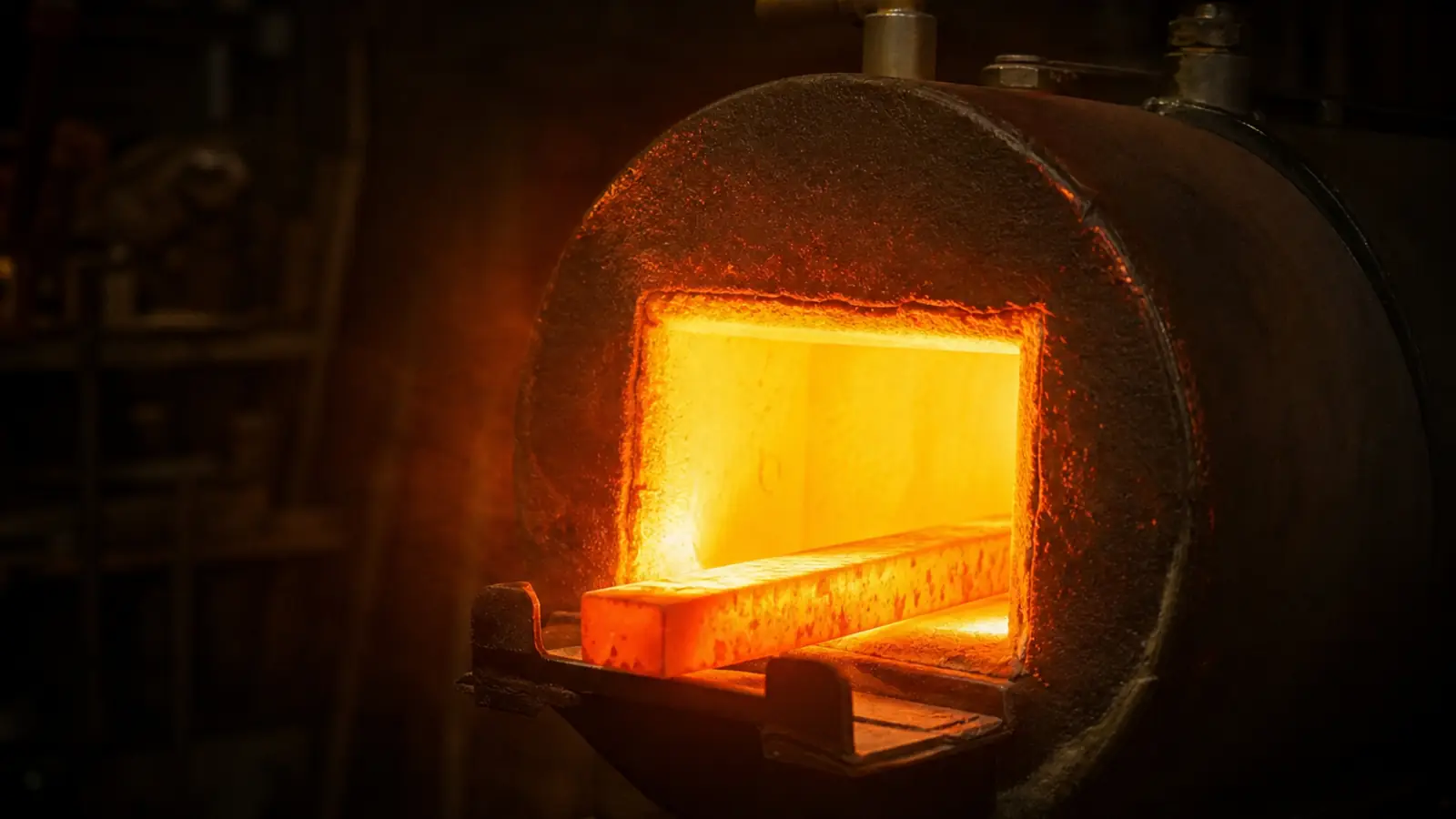
Forge welding joins two clean steel faces by heating them to a bright-yellow 'sweating' heat (about 2200-2300F) and hammering them into one piece. Flux, usually borax, melts at forging heat, dissolves the iron-oxide scale, and seals out air so the surfaces can fuse. Success comes down to clean, flat, close-fitting metal, the right heat, and light first blows.
Forge welding, plainly
Forge welding is the oldest way to join steel: heat two pieces until their surfaces are nearly molten, then hammer them into one solid piece. There is no filler rod and no electricity, just heat, clean metal, and flux. It is also where many beginners get stuck, because the window between 'not hot enough' and 'burned up' is narrow, and any oxide or dirt on the mating faces will stop the weld cold.
This guide zeroes in on the part that confuses newcomers most: flux, and specifically borax. Below you will find what flux actually does, how to apply it, what welding heat looks like in the forge, why welds fail, and a quick look at pattern-welded (damascus) steel.
Why blacksmiths use borax (what flux does)
When steel is heated in open air, its surface forms iron-oxide scale, the gray-black flakes you see fall off the anvil. That scale is a wall: two scaled faces cannot fuse no matter how hard you swing. Flux fixes this in two ways at once.
- It melts into a thin liquid glass at forging heat and dissolves and floats away the scale, exposing clean metal underneath.
- It seals the surface from oxygen, so fresh scale cannot reform while you bring the joint up to welding temperature.
Plain borax (sodium tetraborate, the same chemistry as laundry booster) is the classic beginner flux because it is cheap, easy to find, and melts around 1500F, well below welding heat. Anhydrous (dried) borax is best because leftover water makes the flux spit and foam. Commercial blends add iron powder or fluorides to widen the heat window and help stubborn or higher-alloy steels, but you do not need them to make your first welds. That is the honest answer to *why do blacksmiths use borax*: it is a cheap, effective scale solvent and air barrier.
| Problem | Why it happened | What to change |
|---|---|---|
| Weld won't take | Steel too cold | Reach a bright-yellow sweating heat (~2300F) |
| Scale trapped in seam | Dirty or scaled faces | Grind faces bright and flat, flux early |
| Bare spots, no flux flow | Fluxed too late or too little | Flux at dull red; re-flux for a second heat |
| Joint shears apart | First blows too hard | Tack with light taps, then increase force |
| Metal sparks and crumbles | Overheated and burning | Pull sooner; carbon steel burns above ~2500F |
| Glassy inclusion in weld | Too much flux pooled | Use a thin, even coat; let excess squeeze out |
Flux for forge welding
You can start with plain anhydrous borax for mild steel and simple carbon steels. Buying dedicated forge-welding flux (or dried borax) rather than scooping straight from a damp box helps: dry flux flows cleaner and spits less. Keep it in a sealed, labeled container, well away from your quench oil and other shop chemicals.
Anhydrous borax forge-welding flux
1 lb
Plain anhydrous borax is the classic forge-welding flux. Flux fumes and flying scale are hazards - eye protection and ventilation required.
Forge-welding flux (borax blend)
1 lb
Borax blended with iron/other additives to weld at a slightly lower heat. Handy for beginners still dialing in welding temperature.
How to flux and set a weld
None of this works without clean, flat, close-fitting surfaces, so start there. Wire-brush or grind the mating faces flat and bright, and cut a slight scarf (a shallow, angled or gently convex face) on each piece. A scarf lets trapped flux and gunk squirt out the sides as you weld instead of getting locked inside the joint. Then work in this order.
- Bring to a dull cherry red and flux. Sprinkle borax over the joint; it will bubble, melt, and wick into the seam.
- Reheat evenly to welding heat. You are looking for a bright, greasy, almost sweating surface near 2200-2300F for mild steel. Confirm the range for your alloy on the forging temperature chart, and cross-check the color against the forging temperature table.
- Set the weld with light blows first. Move fast from the forge to the anvil, then *tack* the faces with light taps working from the center outward before they cool. Light first blows keep the still-fragile joint from shearing apart.
- Follow immediately with firmer blows. Once the faces have grabbed, increase force to fully consolidate the weld.
- Re-flux and take a second heat. A second welding heat closes any gaps and refines the joint. Now you can hammer with normal force.
Higher-carbon steels like 1084 weld at a slightly lower heat than mild steel and scorch more easily, so pull them a hair sooner. See the knife steel comparison for where common steels sit.
Why forge welds fail
Almost every failed weld traces back to one of three causes.
- Too cold. This is the number-one beginner mistake. If the metal is not at that bright sweating heat, the faces skid instead of fusing. Judge by color, not the clock.
- Dirty or scaled surfaces. Oil, rust, thick scale, or a gap between faces all block the weld. Clean, flat, and tight beats hot-but-dirty every time.
- Too much flux, or hitting too hard too soon. A thick pool of flux gets trapped as a glassy inclusion, and heavy first blows shear the tack before it sets. Use a thin, even coat and start light.
Forge welding also demands more heat than everyday forging, budget roughly 25% more, so a marginal forge that handles ordinary work may never reach welding temperature. If you are building or buying, size the burner with the forge burner BTU calculator and lean toward a 1 in burner or a tightly sealed forge; our propane forge for beginners picks note which models can actually weld. Beyond flux and a hot forge you want a heavy hammer, an anvil with good rebound, and tongs that hold your stock square, the basics covered in our blacksmithing starter kit guide.
A quick word on damascus
Damascus, or pattern-welded steel, is just forge welding scaled up: you stack alternating layers of two contrasting steels (often a high-carbon steel and a nickel-bearing steel for visual contrast), flux and weld the stack into a solid billet, then draw it out, cut, fold, and re-weld to multiply the layers. The wavy pattern appears after grinding and an acid etch. It is a natural next step once plain welds are reliable, not a starting point, so master a simple two-bar weld first. Pattern-welded billets for knives need a forge with room and even heat; see the best propane forge for knife making if that is your goal.
Frequently asked questions
Can I use laundry borax for forge welding?
Yes. Standard 20 Mule Team-style borax works fine for mild steel and simple carbon steels, which is why it is the go-to beginner flux. Drying it first (anhydrous borax) is better because leftover water makes the flux spit and foam when it hits hot steel. It is far cheaper than commercial flux and perfectly adequate for learning to weld.
What temperature is forge welding?
For mild steel, roughly 2200-2300F, a bright, near-white yellow with a wet, greasy, 'sweating' surface. Higher-carbon steels weld a little lower and burn more easily. Judge by color and that sweating look rather than a number, since forge thermometers are unreliable. Cross-check the range for your specific steel on the forging temperature chart.
Why does my forge weld keep failing?
Almost always one of three things: the steel is too cold, the mating faces are dirty or scaled, or you used too much flux and hit too hard on the first blow. Get to a bright sweating heat, keep the faces clean, flat, and tight, use a thin even coat of flux, and tack lightly before setting firmer blows.
Do I need flux to forge weld?
In an open or propane forge, essentially yes. Flux dissolves the scale and blocks air so the faces can fuse. Experienced smiths sometimes do dry, fluxless welds in a tightly controlled reducing atmosphere, but that is an advanced technique. Beginners should always flux; borax is cheap insurance against a scaled, failed joint.
Can I forge weld in a propane forge?
Yes, if it is hot enough. Forge welding needs about 25% more heat than ordinary forging, so you want a strong burner, typically a 1 in naturally-aspirated burner or a well-sealed forge that reaches and holds around 2300F. A small, leaky single-burner forge often cannot get there. Size your setup with the forge burner BTU calculator.
What is damascus steel?
Modern damascus is pattern-welded steel: two contrasting steels stacked in layers, forge welded into a billet, then drawn out and folded repeatedly to multiply the layers. Etching the finished surface reveals the pattern. It is built entirely on forge-welding skill, so get reliable single welds first before attempting a multi-layer billet.
Last verified 2026-06. Specs, sizes and market prices change - confirm details on the retailer page before buying.