Heat Treating Knife Steel: A Beginner's Guide
Quick answer
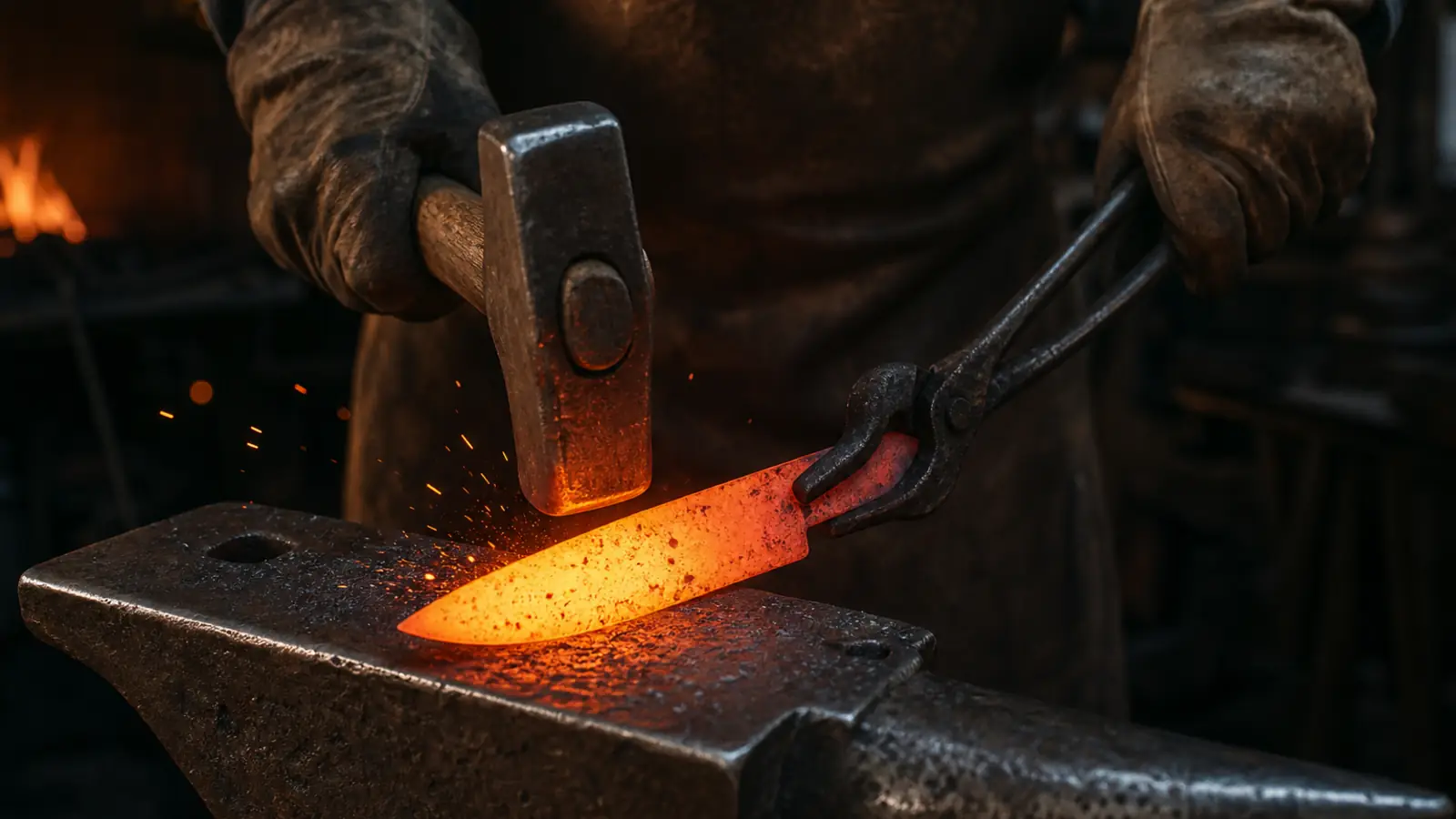
Heat treating turns a shaped bar of carbon steel into a blade that holds an edge. For a beginner the path is three clean stages: normalize to refine the grain, harden by quenching from about 1500F, then temper twice in a kitchen oven. Start with 1084 - it is the most forgiving steel and quenches in plain warm oil.
How Heat Treating Actually Works
A knife blank straight off the anvil is soft. The steel's internal grain is coarse and stressed from forging, and it will not hold an edge. Heat treating rearranges that structure so the blade gets hard enough to sharpen and keep an edge, without being so brittle it snaps in use.
For simple carbon steels the whole process is three stages done in order: normalize, harden, temper. Skip or rush one and you get a warped, cracked, or dead-soft blade. The good news is that none of it needs exotic gear - a propane forge, a magnet, a jug of quench oil, and a kitchen oven cover the basics. If you are still choosing steel, our knife steel comparison shows how each one behaves, and 1084 is the steel nearly every teacher points beginners toward because it is forgiving and quenches in plain oil.
Stage 1: Normalize to Refine the Grain
Normalizing relieves forging stress and shrinks the grain, which is what makes the finished edge tough instead of chippy. Heat the blade evenly to non-magnetic - the point where a magnet stops sticking, around 1414F (768C) for carbon steel - then a touch beyond, pull it from the forge, and let it cool in still air until it loses all color and stops glowing. Do not quench.
Repeat this two or three times, backing the peak heat off slightly on each pass. Aim for even color the full length of the blade; a torch-hot tip over a dull ricasso normalizes unevenly and invites a warp later. A forging temperature chart helps you read those colors in dim shop light. Normalizing is the step beginners skip most often, and it is the cheapest insurance against a blade that cracks in the quench.
Stage 2: Harden - The Quench
Hardening is the make-or-break moment. Bring the blade up to its austenitizing temperature - for 1084 that is about 1500F (816C), just past non-magnetic - and hold it there evenly for a short soak of roughly 1 to 3 minutes so the whole cross-section reaches heat. Keep the blade shaded from direct flame so you can judge color, and keep moving it for an even heat.
Then quench: plunge the blade in edge-first, straight down, and hold it dead still until the flames and sizzling stop. The quench medium must match the steel. 1084, 5160, and O1 harden in warm oil around 120F (49C); 1095 needs a fast oil; W2 wants water or brine and cracks easily, so it is not a beginner steel. The wrong quench is the fastest way to ruin a blade - too slow and it stays soft, too fast and it cracks. Warm canola or a purpose-made quench oil both work for 1084.
Quench Oil for a First Blade
You can start with warm canola from the grocery store, but a purpose-made quench oil has a known cooling speed, a higher flash point, and less smoke - which matters when a 1500F blade hits it. Warm any oil to about 120F (49C) before the quench so it pulls heat evenly, and keep a metal lid nearby.
Fast quench oil (knife making)
1 gal
Purpose-made fast oil for hardening simple carbon steels like 1084. Warm to ~120F before use. Never quench in water unless the steel calls for it.
Parks-style quench oil
1 gal
A fast commercial quenchant favored for 1084/1075. Have a lid nearby to smother flare-ups and quench outdoors or well ventilated.
Canola / vegetable quench (budget)
1 gal
Warm canola works as a cheap medium-speed quench for 1084/5160 while you learn. Purpose-made fast oils are more consistent for 1095/W2.
| Steel | Harden temp | Quench | Notes |
|---|---|---|---|
| 1084 | ~1500F | Warm oil | Best first steel; forgiving |
| 1095 | ~1475F | Fast oil | Needs a fast quench; less forgiving |
| 5160 | ~1525F | Warm oil | Tough spring steel |
| O1 | ~1500F | Warm oil | Oil-hardening; beginner friendly |
| W2 | ~1475F | Water/brine | High crack risk; advanced only |
Stage 3: Temper - Always, Twice
Straight out of the quench the blade is glass-hard and just as brittle - drop it and it can shatter. Tempering pulls that brittleness back to something usable. Do it within the hour, before the blade sits and cracks on its own.
Clean the flats so you can watch the color, then bake the blade in a kitchen oven at 375-450F (190-232C) for one full hour, let it cool to room temperature, and bake it a second time. For 1084 a temper near 400F gives a hard, springy edge in the low 60s HRC. Two cycles are standard: the first pass transforms retained austenite and the second tempers what the first created. An oven thermometer beats the dial - most home ovens swing 25F or more. Never skip tempering, and never trust a single cycle.
How to Know It Worked
Two simple tests tell you if the heat treat took, no lab required.
- File skate: right after hardening, before tempering, drag the corner of a sharp file across the edge. On a properly hardened blade the file skates and skids without biting. If it cuts in and grabs, the blade is soft - the quench was too cool or too slow, and you should re-normalize and try again.
- Brass-rod flex: after tempering, set the edge against a brass rod and press sideways so the very edge flexes. A good temper lets the edge flex and spring back. If it chips, it is too hard (temper hotter next time); if it stays bent, it is too soft (you over-tempered).
Common Beginner Failures
- Warp: usually an uneven quench or entering the oil at an angle. Go in edge-first and dead straight. Small warps can sometimes be clamped straight during the first temper.
- Quench crack: a sharp ping in the oil, or a hairline you find days later. Almost always a too-fast quench for the steel (water on 1084), skipped normalizing, or sharp inside corners that concentrate stress.
- Dead-soft blade: the file bites everywhere. The steel never reached temperature, the soak was too short, or the oil was the wrong speed. Re-normalize and repeat the quench.
- Unknown steel: if you cannot confirm what the steel is, you cannot heat treat it reliably. Known, labeled stock like 1084 is worth the few extra dollars for a first knife.
Get temps & quench for your steel
How to Heat Treat a 1084 Carbon-Steel Knife
- Normalize Heat the finished blade evenly to non-magnetic (about 1414F), pull it, and let it cool in still air until it stops glowing. Repeat two or three times, backing off the peak heat slightly each pass. Do not quench.
- Bring to hardening heat Heat the blade evenly to its austenitizing temperature, about 1500F for 1084 - just past non-magnetic. Shade it from direct flame to judge color and soak briefly, roughly 1 to 3 minutes, so the whole cross-section reaches temperature.
- Quench in warm oil Plunge the blade edge-first and dead straight into oil warmed to about 120F, using a deep steel container with a lid nearby. Hold it still until the flames and sizzling stop. Use warm oil for 1084 - never water.
- File-test the hardness Before tempering, drag a sharp file corner across the edge. It should skate and skid without biting. If the file grabs, the blade is soft; re-normalize and quench again.
- Temper twice Within the hour, bake the clean blade at about 400F for one hour, cool it to room temperature, then bake a second one-hour cycle. Use an oven thermometer. This drops the brittleness to a usable, springy hardness.
- Brass-rod test Press the tempered edge sideways against a brass rod so the edge flexes. It should flex and spring back. If it chips, temper hotter; if it stays bent, it was over-tempered.
Frequently asked questions
What is the easiest steel to heat treat for a first knife?
- It is a simple high-carbon steel with a wide, forgiving hardening window, it goes non-magnetic close to its quench temperature, and it hardens fully in plain warm oil - no water, no fast oil, no special soak. That combination means fewer cracks and soft spots while you learn. Buy it labeled from a knife-steel supplier so you know exactly what you have.
Can I really temper in my kitchen oven?
Yes. Tempering carbon steel happens at 375-450F, which any home oven reaches. Use a separate oven thermometer rather than trusting the dial, since most ovens swing 25F or more, and run two one-hour cycles with a cool-down between them. Do the tempering on clean metal within an hour of quenching so the brittle blade does not crack while it waits.
Do I actually need to normalize, or can I just harden?
You can skip it, and beginners often do, but normalizing is the cheapest way to avoid problems. Heating to non-magnetic and air-cooling two or three times refines the grain and relieves forging stress, which reduces warping and cracking in the quench and gives a tougher finished edge. It costs only a few extra minutes at the forge, so it is worth doing every time.
Why did my blade crack in the quench?
The most common cause is a quench that was too fast for the steel - for example, using water on 1084, which is an oil-hardening steel. Other causes are skipping normalization, sharp inside corners at the plunge line or ricasso that concentrate stress, or oil that was too cold. Match the quench to the steel, normalize first, and warm your oil to about 120F.
How do I find non-magnetic without a thermometer?
Hold a magnet on a rod or wire near the hot blade. Carbon steel loses its magnetism at roughly 1414F, right before its hardening temperature. When the magnet no longer sticks, you are close; heat a touch past that point for the quench. It is not a precise reading, but combined with steel color it is accurate enough for simple carbon steels like 1084.
Last verified 2026-06. Specs, sizes and market prices change - confirm details on the retailer page before buying.