Where to Buy Steel for Blacksmithing
Quick answer
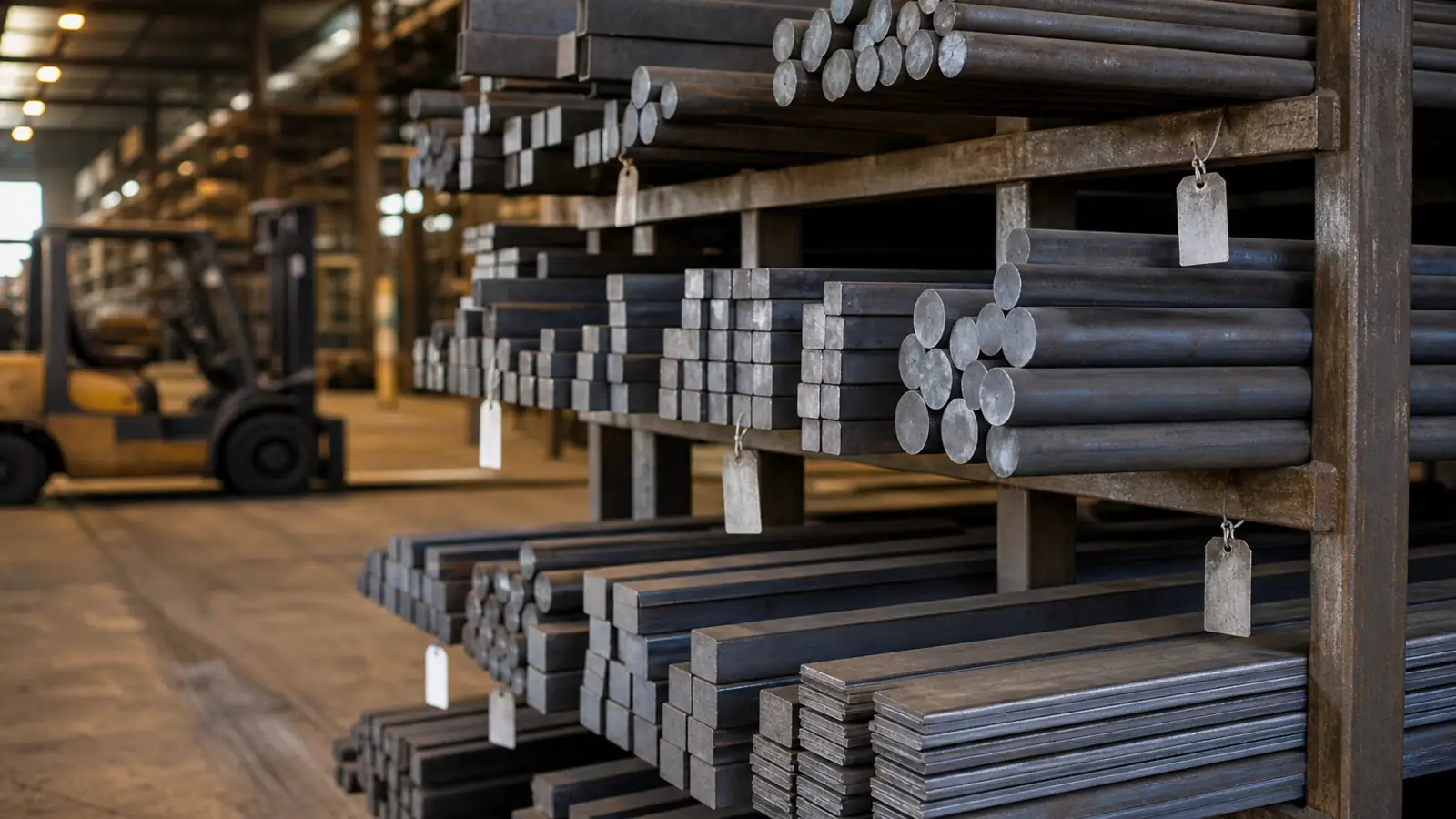
The cheapest reliable source of blacksmithing steel is a local steel supplier or service center: hot-rolled A36 mild steel bar runs roughly $1-2 per foot in beginner sizes (1/4-1/2 in) when bought as 20 ft sticks. Big-box stores carry the same sizes at three to five times the price. For knives, buy known grades like 1084 or 5160 from specialist suppliers rather than guessing at scrap, and never forge galvanized or plated steel of any kind.
Local steel suppliers: the default answer
Every mid-sized US town has a steel supplier or metal service center - the businesses that sell structural steel to fabricators and welders. They are the cheapest source of new forging stock, and nearly all of them will sell to a walk-in with cash or a card, even if the loading dock looks intimidating.
Ask for hot-rolled A36 round or square bar. A36 is the standard structural mild steel (roughly 0.25% carbon or less), it forges beautifully, and it is what 90% of beginner projects should be made from. Hot-rolled matters: it costs less than cold-rolled and the gray mill scale is irrelevant when you are heating the bar anyway.
Practical notes for the first visit:
- Steel sells by the 20 ft stick. In beginner sizes - 1/4, 3/8, and 1/2 in - expect roughly $1-2 per foot, cheaper per pound as bars get bigger. Most yards will shear sticks in half for free or a dollar so they fit in a car.
- Ask about the remnant or drop rack. Offcuts often go for scrap-adjacent prices by the pound.
- Call ahead and ask if they have a will-call counter and a minimum order. Many have a $20-50 minimum, which conveniently equals a nice starter bundle.
To convert between feet and pounds when comparing quotes, use the steel bar weight calculator - suppliers quote per foot, per pound, or per stick depending on mood.
Big-box stores: convenient, but 3-5x the price
Home Depot, Lowe's, Ace, and Tractor Supply all carry a small rack of "weldable steel" - plain low-carbon rod, flat bar, and angle in 3-6 ft lengths. It forges fine. The problem is price: a 1/2 in x 3 ft plain round rod runs about $9-10 at big-box stores (over $3 per foot), while the same diameter A36 from a steel yard costs a third of that or less.
Use the big-box rack for what it is good at: a single bar for tonight's project, odd hours, or towns with no steel supplier. Two cautions. First, buy only the plain (uncoated) steel - the same racks hold zinc-plated rod and galvanized pieces that must never go in a forge. Second, some of the rod is cold-rolled 1018 rather than A36; it forges the same for hooks and practice, so do not overthink the label at this stage.
Online metal suppliers
If no yard is nearby, several established online suppliers sell small quantities of new steel with no minimums (no affiliation - listed alphabetically as known options):
- Metal Supermarkets - a franchise with 135+ physical stores across North America plus online ordering; useful because you can also walk in and buy cut pieces the same day.
- OnlineMetals - large catalog of A36 and 1018 bar in short cut lengths, ships small parcels.
- Speedy Metals - similar range, sells A36 flat, round, and square in beginner-friendly cut sizes.
Expect to pay a real premium per pound versus a local yard once shipping is added - heavy, dense packages are exactly what parcel carriers charge the most for. Online ordering makes the most sense for odd sizes a local yard will not stock in small quantity, precision-cut pieces, or specific alloys. For everyday A36 practice stock, a local supplier or even the big-box rack usually beats shipped steel on total cost.
Knife steel: buy known grades from specialist suppliers
The moment a project needs heat treating - knives, chisels, punches, springs - switch from mystery steel to a known grade, because every quench-and-temper recipe assumes you know what the steel is. The beginner-friendly trio:
- 1084 - the classic first knife steel. Near-eutectoid carbon (~0.84%), hardens well in fast quench oil with a simple one-temperature heat treat.
- 1095 - more carbon, holds a fine edge, but demands a faster quench and tighter temperature control. Compare the two in 1084 vs 1095.
- 5160 - the leaf-spring alloy, extremely tough, ideal for choppers and the springy tools that mild steel cannot make.
Two long-standing US specialist suppliers are New Jersey Steel Baron and Alpha Knife Supply, both of which stock these grades as flat bar sized for blades; plenty of knifemaking shops carry them too. A blade's worth of 1084 typically costs $8-20, trivial next to the hours you will put into it. See the knife steel comparison for how the common grades trade toughness against edge holding, and the beginner heat-treating guide before you buy anything fancier.
The scrapyard strategy
Scrapyards, farm auctions, and mechanic shops sell forging stock by the pound - often $0.25-0.60/lb where yards sell to the public at all (many are buy-only; call first). Scrap is how smiths have always sourced spring and tool steel cheaply, with two rules: know what an item probably is, and test before trusting it in anything that matters.
The reliable finds:
- Leaf springs - typically a 5160-type spring steel. Great for choppers, tongs, and springy tools. Inspect for rust pitting and fatigue cracks; a cracked spring hides more cracks.
- Coil springs - similar spring-steel family; straightening the coil is honest forging practice by itself.
- Axles and shafts - usually medium-carbon (1040-1050 class); good for hammers, drifts, and top tools.
- Old files - high-carbon (1095/W1 class) if they are quality files and not case-hardened junk; test a corner.
- Sucker rod (oilfield) - varied alloys, commonly 4130-ish; excellent tong and tool-body stock.
Two famous items deserve caveats. Rebar is made to ASTM A615 strength grades, not chemistry - composition swings bar to bar, so treat it as free practice steel for stakes and garden art, never for tools. Railroad spikes marked HC are "higher carbon" only by track-spike standards: the governing spec (ASTM A65) tops Grade 2 out around 0.30% carbon, mild-to-medium at best. Spike knives are a fun novelty - see the railroad spike knife guide - but they will not hold an edge like real knife steel, and sourcing spikes legally means buying them, not pulling them.
| Scrap item | Likely steel (never guaranteed) | Best beginner use |
|---|---|---|
| Leaf spring | 5160-type spring steel | Choppers, tongs, springy tools, hardy tools |
| Coil spring (auto/truck) | 5160 / 9254-class spring steel | Punches, chisels, small blades |
| Axle or driveshaft | ~1040-1050 medium carbon | Hammers, drifts, struck tools |
| Quality old file | 1095 / W1-class high carbon | Small blades, scrapers, gravers |
| Sucker rod | Varied alloy, often 4130-ish | Tong blanks, tool bodies, stands |
| Lawn mower blade | Medium-carbon alloy, varies widely | Practice blades, garden tools |
| Rebar | A615 - chemistry varies bar to bar | Practice only: stakes, hooks, garden art |
| Railroad spike (HC) | Max ~0.30% carbon per ASTM A65 | Novelty knives, bottle openers, decor |
The 60-second junkyard steel test
Two quick tests sort scrap before you invest forge time in it.
Spark test. Touch the piece to a bench grinder next to a bar of known mild steel and compare. Low-carbon steel throws long orange streaks with only a few forks; as carbon rises the stream gets busier, and true high-carbon steel erupts in dense, bushy white bursts that start close to the wheel. Dull, short, reddish sparks suggest cast iron - not forgeable. It takes a few comparisons to calibrate your eye, which is why you always grind the known bar first.
Quench test. Forge a small coupon of the mystery steel, heat it until a magnet no longer sticks (around 1400F) plus one shade brighter, and quench it in oil. If a file skates off the surface instead of biting, the steel hardened - it has enough carbon for blades and tools. If the file bites, try again with a water quench on a fresh coupon (carefully - water cracks some steels); if it still stays soft, treat it as mild steel and use it accordingly. Match the quench to the steel with the quench calculator once you know what you are working with.
Steel to avoid, no matter how free
Some metal is not worth the risk or the frustration:
- Galvanized or zinc-plated anything - fence posts, pipe, hardware-store brackets, plated rod. Heating zinc releases fumes that cause metal fume fever (NIOSH documents the chills-fever-nausea syndrome that follows a few hours after exposure). The dull gray or spangled coating is the tell. Do not grind it off and forge it anyway; pits keep zinc, and the grinding dust is its own hazard.
- Chrome or nickel plated steel - old bumpers, shafts, tools with bright mirror finishes. Heated plating releases its own toxic fumes and contaminates the forge.
- Cadmium-plated fasteners - common on older aircraft and automotive bolts, often a dull gold tint. Cadmium fumes are seriously toxic.
- Sealed or pressurized anything - tanks, cylinders, struts, shocks. Heat plus a closed volume is a bomb, not a project.
- Cast iron - engine blocks, radiators, old window weights. It crumbles under the hammer instead of forging.
- Mystery steel for struck tools - hammers, hardy tools, and anything hit by or hitting hardened steel should be made from known stock. An unknown alloy that hardens unpredictably can chip and send fragments flying.
When in doubt, spend the couple of dollars on new bar. Cheap steel is only cheap if it cannot hurt you.
Frequently asked questions
What steel should a beginner blacksmith buy first?
A few 20 ft sticks of hot-rolled A36 mild steel from a local supplier: 1/4 in and 3/8 in square for hooks and leaves, plus 1/2 in round for heavier practice. Expect roughly $1-2 per foot. That is months of projects for $30-60, with no heat-treating decisions to get wrong while you learn hammer control.
Can you forge rebar?
Yes, as free-ish practice steel - and only that. Rebar is graded to ASTM A615 strength requirements, not chemistry, so carbon content varies bar to bar and even along one bar. It is fine for tent stakes, hooks, and garden art, but never for tools or blades that need predictable hardening. If a project matters, spend a dollar on known bar stock.
Are railroad spikes high-carbon steel?
No. Spikes stamped HC are "higher carbon" only by track-spike standards - the governing ASTM A65 spec puts them around 0.30% carbon maximum, similar to medium-mild steel. They forge into fun novelty knives and openers but will not hold an edge like 1084 or 5160. Buy spikes from a legitimate seller; taking them from tracks is illegal and dangerous.
How much does blacksmithing steel cost?
From a steel yard, beginner-sized hot-rolled A36 runs about $1-2 per foot in 20 ft sticks, and remnant-rack drops go cheaper by the pound. Big-box stores charge $3-5 per foot for short lengths of the same sizes. Scrapyard steel, where sold to the public, is often $0.25-0.60/lb. Known knife steel runs $8-20 per blade's worth from specialist suppliers.
Is it safe to forge galvanized steel if the coating is ground off?
Treat it as no. Grinding zinc creates hazardous dust, coating hides in pits and threads, and heating any remainder releases the fumes behind metal fume fever - the flu-like illness NIOSH ties to zinc oxide exposure. With plain A36 costing a dollar or two per foot, there is no economic case for salvaging galvanized stock. Leave it for the recycler.
What steel are leaf springs, and are they good for knives?
Leaf springs are typically a 5160-type spring steel, which is why smiths prize them: tough, forgiving, and great for choppers and tools. Two caveats - used springs can carry fatigue microcracks that surface as blade flaws, and "typically" is not "always." Spark test, forge a test coupon, and quench test before committing hours. New 5160 bar is cheap insurance for an important blade.
Last verified 2026-07. Specs, sizes and market prices change - confirm details on the retailer page before buying.