Metal Melting Points Chart (°F and °C)
Quick answer
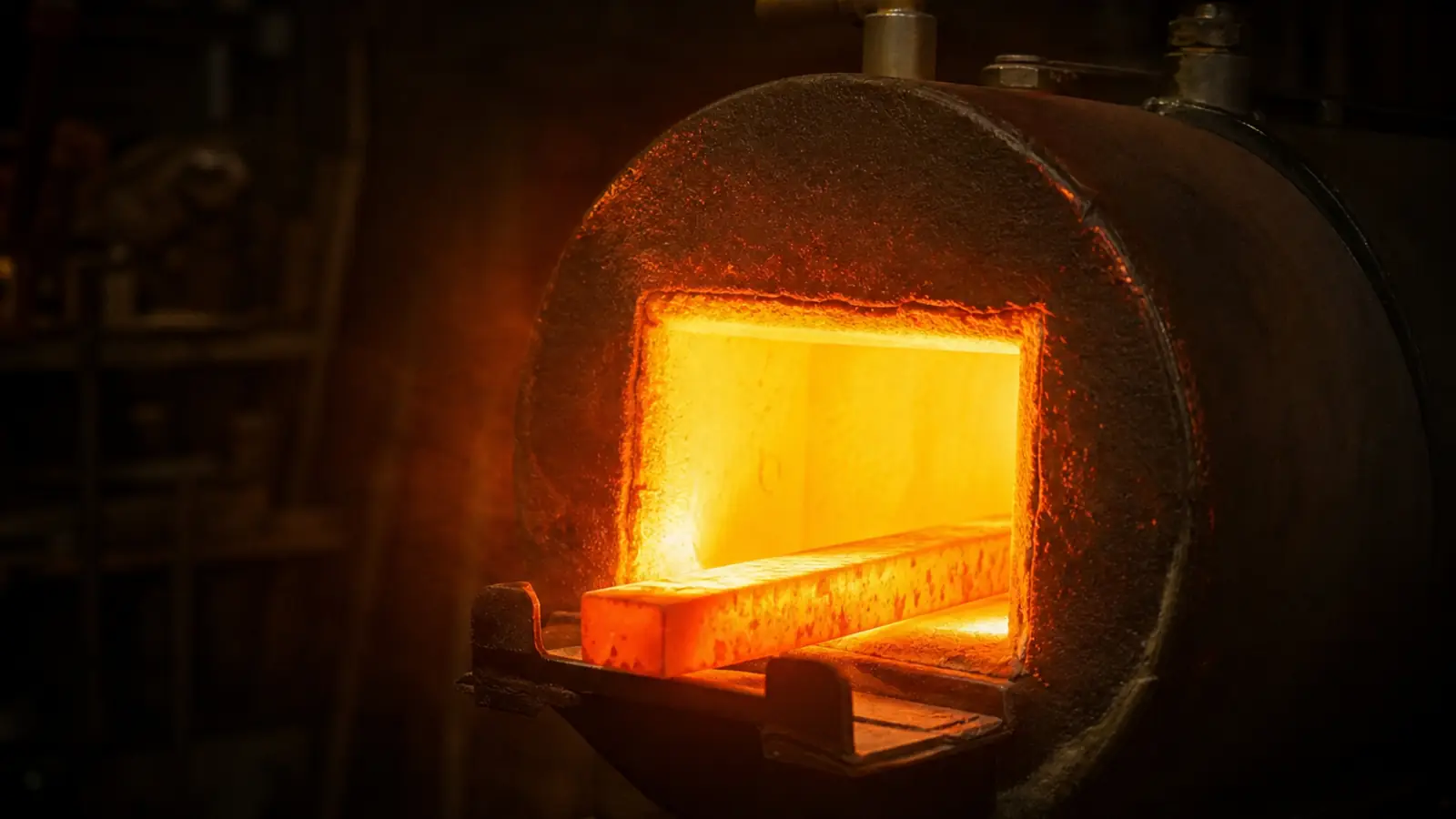
Lead melts at 621°F (327°C), zinc at 787°F (420°C), aluminum at 1,221°F (660°C), copper at 1,984°F (1,085°C), and plain carbon steel at roughly 2,600-2,800°F (1,425-1,540°C). Tungsten tops the chart at 6,192°F (3,422°C). A propane forge chamber usually peaks around 2,300-2,500°F - hot enough to forge steel and melt aluminum, brass, or (barely) copper, but nowhere near hot enough to melt steel. Blacksmiths shape steel at 1,700-2,300°F, hundreds of degrees below its melting point.
Melting point vs working temperature
A melting point is where a solid becomes a liquid - and for a blacksmith it is mostly a boundary you stay far away from. Steel is forged in its plastic range, roughly 1,700-2,300°F (925-1,260°C), which is 500-900°F below where it melts. The forging temperature table covers that working scale color by color, and the interactive forging temperature chart shows the glow that goes with each band.
Melting points still matter for three practical reasons. First, they tell you which metals your equipment can actually liquefy for casting: aluminum at 1,221°F is a weekend project, copper at 1,984°F is a stretch, and steel at 2,600°F and up is out of reach for hobby gear. Second, they warn you which metals forge heat destroys - solder, lead, zinc, and aluminum all melt (or worse, vaporize) at temperatures a propane forge blows past in its first minutes. Third, they flag hazards: zinc's low boiling point is exactly why galvanized steel has no place in a forge.
One reading note: pure metals melt at a single temperature, while alloys melt across a range between their solidus and liquidus points. That is why brass, cast iron, steel, and stainless get bands in the table below rather than one number.
| Metal | Melting point (°F) | Melting point (°C) | Notes for smiths |
|---|---|---|---|
| Lead | 621 | 327 | Melts on a hot plate; ventilate and keep it out of the forge |
| Zinc | 787 | 420 | Boils at 1,665°F (907°C) - the galvanized-coating hazard |
| Aluminum (pure) | 1,221 | 660 | Common alloys start melting around 1,000-1,200°F |
| Brass | 1,650-1,720 | 900-940 | Varies with zinc content; fumes zinc when melted |
| Copper | 1,984 | 1,085 | At the upper edge of propane forge range |
| Cast iron (gray) | 2,060-2,200 | 1,130-1,200 | Casts well but crumbles under the hammer - not forgeable |
| Stainless steel | 2,550-2,790 | 1,400-1,530 | Depends on grade; 304 sits near the low end |
| Carbon steel | 2,600-2,800 | 1,425-1,540 | More carbon = lower melting range |
| Wrought iron | 2,700-2,900 | 1,480-1,590 | Nearly pure iron; forge welds beautifully |
| Iron (pure) | 2,800 | 1,538 | Reference point for the whole steel family |
| Titanium | 3,034 | 1,668 | Forgeable but reactive; not a beginner metal |
| Tungsten | 6,192 | 3,422 | Highest of any metal; shaped by sintering, not casting |
Forging happens well below melting
Steel never gets close to liquid in normal smithing. At bright red, around 1,650°F (900°C), it starts moving under the hammer. At orange to yellow, roughly 1,800-2,100°F (982-1,149°C), it works like stiff clay - this is where most forging happens. At forge welding heat, about 2,200-2,350°F (1,204-1,288°C), the surfaces become tacky enough to fuse under light blows. Melting sits hundreds of degrees higher still.
Push past welding heat and steel does not politely melt - it burns. Oxygen attacks the grain boundaries, carbon burns out of the surface, and the bar throws bright white sparks like a sparkler. A burned section is ruined: no amount of hammering heals it, so you cut it off and start over. High-carbon steels burn at lower temperatures than mild steel, which is one more reason knife steels demand closer color control.
The practical takeaway: you do not need a hotter forge, you need a controllable one. Any forge that holds steel at bright orange will handle beginner projects; forge welding is the only common task that pushes a propane forge toward its ceiling.
Open the interactive forging temperature chart
Zinc: why galvanized steel is the one to fear
Zinc melts at a lowly 787°F (420°C), but the dangerous number is its boiling point: 1,665°F (907°C), below even a modest forging heat. Put galvanized steel in a forge and the coating does not drip off - it flashes into zinc oxide fume right as the steel reaches working color. Breathing that fume causes metal fume fever: chills, fever, muscle aches, nausea, and a metallic taste, with symptoms documented by NIOSH typically arriving a few hours after exposure. It usually resolves in a day or two, but it is miserable, repeat exposure is nothing to gamble with, and other coatings (cadmium plating, lead paint) found on scrap are far worse.
The fix is to know your steel. Buy clean bar stock - see where to buy steel for blacksmithing - and treat shiny silver-gray coatings, bolt hardware, fence parts, and pipe as suspect by default. If you must use galvanized material, strip the coating first in a vinegar or citric acid bath and rinse it well. Never burn zinc off in the forge, indoors or out.
What a propane forge can and cannot melt
A propane forge is a forging tool, not a foundry, but the question comes up constantly. A well-insulated forge with a properly tuned burner peaks somewhere around 2,300-2,500°F (1,260-1,370°C) chamber temperature; the exact ceiling depends on insulation, chamber size, and burner output (the forge burner BTU calculator shows how those trade off).
Against the chart above, that ceiling sorts metals into three groups:
- Melts easily: lead (621°F), zinc (787°F), aluminum (1,221°F), brass (1,650-1,720°F). A forge liquefies these in minutes - the real challenge is containing them, which is a crucible-and-foundry job, not a forge job.
- Marginal: copper (1,984°F) and gray cast iron (2,060-2,200°F) sit close to the working ceiling. A hot two-burner forge can slump or slowly melt small amounts, unevenly. A purpose-built crucible furnace does it far better.
- Out of reach: carbon steel (2,600-2,800°F), stainless (2,550-2,790°F), wrought iron (2,700-2,900°F), titanium (3,034°F). No hobby propane forge holds a melt pool of steel; the most it can do is burn thin sections into sparks.
If casting is the goal, build or buy a lidded crucible furnace and plan the pour. If forging is the goal, the forge you have is already hot enough.
Aluminum: forge it or cast it?
Aluminum shows why melting points drive technique. It melts at 1,221°F (660°C) - barely half of steel's forging temperature - and it gives no color warning at all. Steel glows red long before trouble; aluminum looks the same at 200°F and 1,100°F, then sags into a puddle without ceremony.
Forging aluminum happens cooler than most beginners expect: about 650-900°F (343-482°C) depending on alloy. Since there is no glow to read, smiths mark the workpiece with a Sharpie or a stripe of bar soap - when the mark chars or the soap browns, the bar is in range. Heat it in the mouth of the forge rather than the hot spot, and count seconds instead of watching for color.
Casting flips the problem into an advantage. Melt scrap in a steel crucible, skim the dross off the top, and pour at roughly 1,300-1,400°F (704-760°C) into dry molds. That is why aluminum is the classic first metal for backyard foundry work, while steel remains the classic first metal for forging. Trying to forge aluminum in a steel-hot forge mostly produces expensive puddles.
Frequently asked questions
Can a propane forge melt steel?
No. Carbon steel melts at 2,600-2,800°F (1,425-1,540°C), while even a tight, well-insulated propane forge tops out around 2,300-2,500°F. A forge can overheat and burn thin steel sections - throwing white sparks and ruining the piece - but it cannot produce a usable melt pool. Melting steel takes an induction, arc, or cupola furnace, not hobby forging gear.
Can a propane forge melt copper?
Barely, and not well. Copper melts at 1,984°F (1,085°C), inside a good forge's reach but close to its ceiling, so melts run slow and uneven and burn a lot of propane. Small brass melts (1,650-1,720°F) are more realistic. For repeatable copper casting, use a dedicated crucible furnace that surrounds the crucible with even heat.
Can a propane forge melt aluminum?
Easily. Aluminum melts at 1,221°F (660°C), a temperature a propane forge passes within minutes of lighting. Use a steel crucible or heavy steel pot - never melt directly on the forge floor, where aluminum soaks into and ruins refractory - and expect a coffee-can melt in 15-30 minutes. Skim the dross and pour around 1,300-1,400°F into dry molds.
What is the melting point of steel?
Plain carbon steel melts at roughly 2,600-2,800°F (1,425-1,540°C); more carbon lowers the range, so a 1% carbon blade steel starts melting sooner than mild steel. Stainless grades run about 2,550-2,790°F depending on alloying. For comparison, forging happens at 1,700-2,300°F and forge welding around 2,200-2,350°F - well below any melting.
Why can't you forge cast iron?
Cast iron carries 2-4% carbon and melts at 2,060-2,200°F (1,130-1,200°C), but it has essentially no plastic forging range: heat it to forging color and it crumbles under the hammer instead of moving. It is shaped by casting or machining only. If a bargain "anvil" or scrap bar snaps rather than bends and sparks short and dull red, suspect cast iron.
Is it safe to melt or forge galvanized steel?
No. The zinc coating boils at 1,665°F (907°C) - below normal forging heat - releasing zinc oxide fume that causes metal fume fever: chills, fever, nausea, and muscle aches within hours of exposure. Strip galvanized coatings in a vinegar bath first, or better, spend a few dollars on clean mild steel bar. Ventilation reduces the risk but does not remove it.
Last verified 2026-07. Specs, sizes and market prices change - confirm details on the retailer page before buying.