Propane Forge PSI Settings Chart
Quick answer
For a typical 3/4 in naturally aspirated venturi burner, run about 2-4 PSI for idling and annealing, 5-10 PSI for general forging, 10-15 PSI for heavy sections, and 15-25 PSI for forge welding. Treat these as starting points, not targets: orifice size, burner design, forge volume, and insulation all shift the numbers. Tune by flame behavior and steel color, then note the gauge reading so you can return to the same setting next session.
Ranges, not gospel
Ask ten smiths what PSI they forge at and you will get ten answers - and all of them are right, for their burner. Gas pressure is only one input. Orifice diameter, mixing-tube size, choke setting, forge volume, insulation, and even the weather change how much heat a given PSI delivers. The table below is a consensus starting map for the most common home-shop setup: a 3/4 in naturally aspirated venturi burner feeding a one- or two-burner forge in decent repair.
Use it like this: set the regulator inside the listed band, light up, and let the forge soak for 5-10 minutes. Then judge by two things only - the flame character and the color of the steel. When the forge is doing what you want, write down the gauge reading. From then on the gauge is your repeatability tool: it gets you back to "welding heat on my forge" in one twist of the handle.
Blown (forced-air) burners are a different animal. With a fan supplying air, they typically do the same work at 1-6 PSI, and air is adjusted separately at the blower. If you are not sure which type you have, see atmospheric vs blown forge burners.
| Task | Typical PSI | Steel color / temp target | Notes |
|---|---|---|---|
| Idle / annealing / between heats | 2-4 | Dull to medium red, 1,200-1,500°F | Many venturis sputter below 2-3 PSI; block part of the forge openings to hold heat |
| Heat treating soak | 3-5 | Bright red, non-magnetic, ~1,450-1,500°F | Steady low pressure gives the even soak hardening needs |
| General forging | 5-10 | Orange to yellow, 1,800-2,100°F | Where most hobby work happens; warm up at the high end, then back off |
| Heavy sections / high heat | 10-15 | Bright yellow, 2,100-2,300°F | Thick stock, tooling, and damascus billets on the way up |
| Forge welding | 15-25 | Lemon to near-white, ~2,200-2,350°F | Needs a tight, well-insulated forge; some efficient burners weld at 10-12 PSI |
Why PSI is not BTU
A regulator gauge measures pressure, not heat. Heat comes from the volume of propane actually burned, and volume depends on pressure pushing gas through a specific orifice diameter. Most home-built 3/4 in venturi burners use a MIG contact tip as the jet, and tip size changes everything: a 0.045 in tip passes roughly twice the gas of a 0.030 in tip at the same regulator setting. Two identical-looking burners can differ by tens of thousands of BTU per hour at the same 10 PSI.
That is why the burner maker's instructions outrank any generic chart, this one included. Ron Reil's classic burner pages - the reference designs most hobby venturi burners descend from - describe stable operation from under 2 PSI to well past 30 PSI on the same burner, with the useful range set by the jet size and tuning rather than by the regulator.
Pressure also interacts with air. In a venturi burner the gas jet itself drags combustion air into the tube, so more pressure brings more air - up to the point where the tube cannot mix any more. Past that limit, extra propane just burns outside the forge as dragon's breath instead of heating your steel. Run your own jet size and pressure through the forge burner BTU calculator before assuming you need more PSI.
Estimate your burner's BTU output from PSI and orifice size
The regulator: buy adjustable, 0-30 PSI
Forge burners need a high-pressure adjustable regulator, and the standard recommendation is a 0-30 PSI unit with a gauge. A barbecue grill regulator is useless here: it is fixed at about 11 inches water column - roughly 0.4 PSI - and will never drive a forge burner. The 0-30 range covers everything from a 2 PSI idle to 25 PSI welding runs with headroom to spare, and the gauge is what turns "that sounded about right" into a repeatable setting.
Look for a POL or QCC-1 (Type 1) tank fitting, an LP-rated hose rather than a shop air hose, and gas-rated thread sealant on pipe joints - then leak-test every connection with soapy water before the first light, the same discipline NFPA 58 expects of any LP-gas installation. A quarter-turn ball valve at the burner end gives fast shutoff without touching the tank, and some smiths add a needle valve for fine control at low idle pressures.
The full plumbing walkthrough - regulator types, hose ratings, fittings, and leak testing - is in the propane forge regulator guide.
Pressure hardware that fits this setup
The parts that set and hold your pressure: an adjustable 0-30 PSI regulator with gauge, a rated hose kit, and a manifold if you run two tanks against freeze-up.
Adjustable propane regulator 0-30 PSI
POL/QCC-1 fitting
- Regulator
- 0-30 PSI
0-30 PSI range reaches forge-welding pressure. Confirm the tank fitting (QCC-1) matches your tank.
Adjustable propane regulator 0-20 PSI
POL/QCC-1 fitting
- Regulator
- 0-20 PSI
Fine for general forging heat. If you plan to forge-weld, choose the 0-30 PSI version instead.
Propane hose and 0-30 PSI regulator kit
10 ft hose
- Regulator
- 0-30 PSI
Complete gas train for most forges. Leak-test every joint with soapy water before first light.
Propane regulator, hose and gauge kit
8 ft hose
- Regulator
- 0-30 PSI
Includes a pressure gauge so you can set PSI repeatably. Verify the hose is rated for LP gas, not air.
Two-tank propane manifold (Y-splitter and pigtails)
dual QCC-1 pigtails
Draws from two tanks at once so neither frosts over. The simplest fix when one tank keeps freezing up.
Propane tee manifold with pigtails
brass tee, dual pigtails
Ties two tanks into one supply line. Confirm pigtail fittings match your tank valves (QCC-1).
Read the flame, then the steel
Once the forge is lit, the flame tells you more than the gauge does. Three states to recognize:
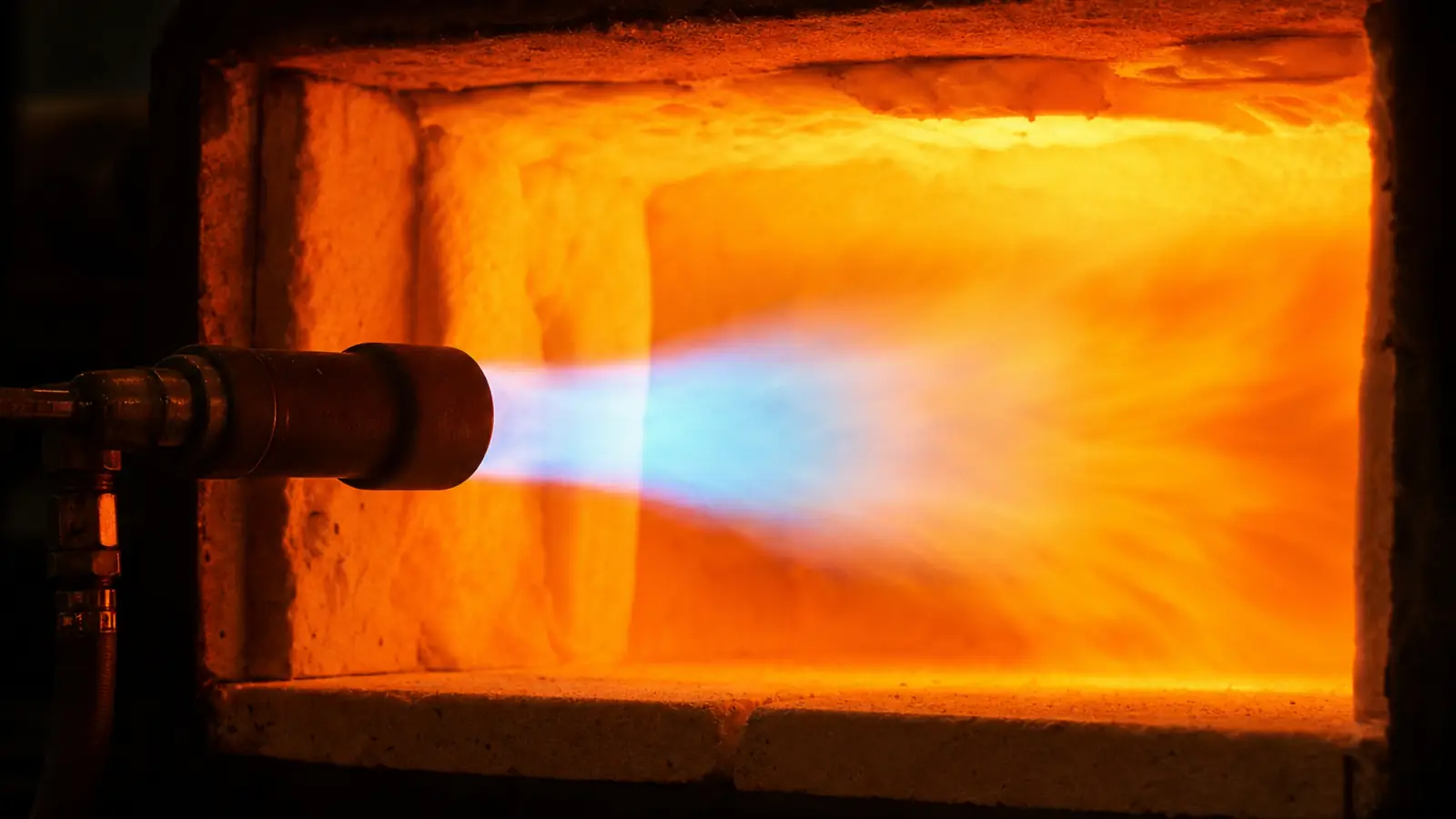
- Neutral: tight blue flame cone at the nozzle, a steady roar, and a short feather of flame - the dragon's breath - lapping out of the forge mouth. This is the target for general forging.
- Rich (reducing): lazy orange-tipped flame, long rolling dragon's breath, sometimes soot. You are burning unmixed propane outside the chamber and wasting fuel. Open the choke or drop the pressure. A slightly rich flame is deliberate for forge welding, since it keeps oxygen off the steel and cuts scale.
- Lean (oxidizing): hissing, pale, hard blue flame that may lift off the nozzle or pop when you change pressure. Excess oxygen scales steel badly and can burn thin sections. Close the choke a touch.
Every pressure change shifts the mixture, because a venturi entrains air in proportion to gas velocity - but not perfectly. Re-check the flame after any regulator adjustment. The step-by-step procedure for choke, jet alignment, and flare position is in how to tune a propane forge burner.
Altitude and tank freeze: the two gotchas
Altitude changes the air, not the propane. Air density drops roughly 3% per 1,000 ft of elevation, so a venturi burner tuned at sea level runs progressively richer as you climb. Around 5,000 ft and above, expect to run the choke further open, drop to a slightly smaller jet, or carry a bit more pressure to reach the same steel colors - your sweet spot will sit somewhat higher than the table.
Tank freeze shows up on cold days and hard draws. A burner pulls vapor off the top of the tank, and liquid propane must boil to replace it - which chills the tank. Pull hard on a small 20 lb bottle and pressure sags as frost climbs the outside; the forge fades even though the regulator has not moved. Fixes, in order of preference: a bigger bottle (a 40 lb tank roughly doubles vaporization capacity), two tanks tied through a manifold, or standing the tank in a tub of plain water to feed it heat. Never point a flame or heater at a propane tank.
Sizing details are in the propane tank sizes guide, and the propane forge cost calculator turns your usual pressure and session length into propane cost per week.
Frequently asked questions
What PSI should a propane forge run at?
For a 3/4 in naturally aspirated venturi burner, 5-10 PSI covers general forging, 2-4 PSI holds an idle or annealing heat, 10-15 PSI drives heavy sections, and forge welding usually takes 15-25 PSI. Those are consensus starting points, not laws: orifice size, forge volume, and insulation all shift the numbers, so tune by flame and steel color.
What PSI do you need for forge welding?
Most 3/4 in venturi setups reach welding heat at 15-25 PSI; efficient burners in tight, well-insulated forges manage it at 10-12 PSI, and blown burners typically weld at 3-7 PSI because the fan supplies air separately. If you cannot reach lemon-to-white heat at 25 PSI, fix insulation, shrink the chamber, or retune the burner - more pressure will not save you.
Why does my burner sputter or pop at low PSI?
Below roughly 2-3 PSI, a venturi jet loses the velocity it needs to pull air, so the flame gets unstable and can pop back into the mixing tube. Wind across the forge openings makes it worse. Run slightly higher pressure, partially block the openings with firebrick, shelter the air intake, or close the choke a touch to stabilize a low idle.
Can I use a BBQ grill regulator on a forge?
No. Grill regulators are fixed at about 11 inches water column - roughly 0.4 PSI - and cannot feed a forge burner that wants 2-25 PSI. Buy an adjustable 0-30 PSI high-pressure regulator with a gauge and an LP-rated hose; the propane forge regulator guide covers fittings and leak testing.
Does more PSI always mean a hotter forge?
Only up to your burner's mixing limit. A venturi entrains air in proportion to gas flow, and past that limit the extra propane burns outside the door as long orange dragon's breath - wasting fuel without raising chamber temperature, and sometimes lowering it. If heat stalls as pressure climbs, back down to the last clean-burning setting and improve insulation or tuning instead.
How long does a 20 lb propane tank last at forging pressure?
Figure roughly 2-3 lb of propane per hour for one 3/4 in burner at 5-10 PSI, so a full 20 lb tank gives about 6-10 hours of general forging - noticeably less at welding pressure, where a hard draw can also frost and starve a small tank. The propane forge cost calculator estimates burn rate and cost for your setup.
Last verified 2026-07. Specs, sizes and market prices change - confirm details on the retailer page before buying.