Propane Tank Sizes for Forges: What to Buy and Why
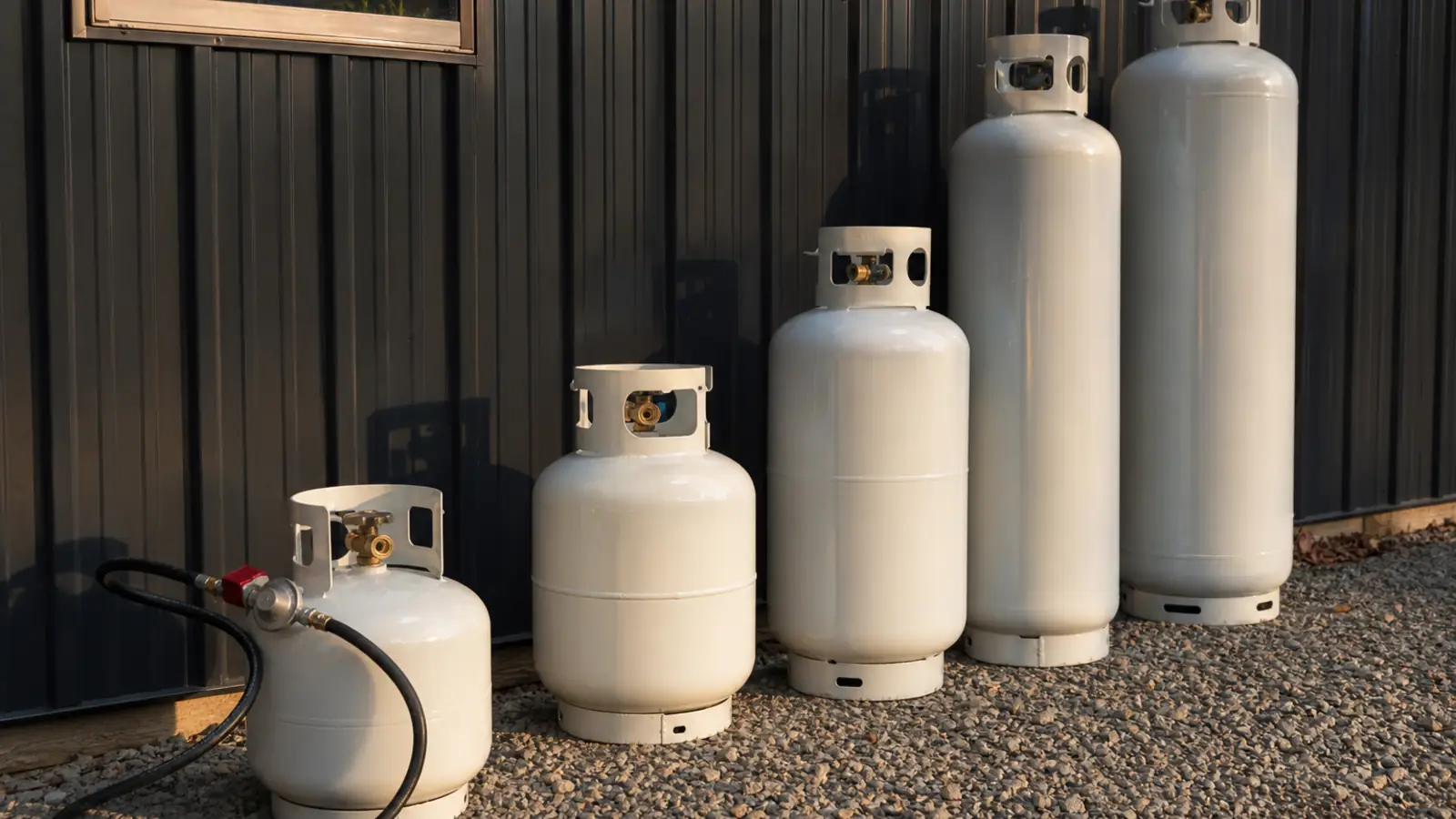
Quick answer
For most beginners a 20 lb propane tank is the practical starting point - it runs a single-burner forge for several hours and refills cheaply. Step up to a 30 or 40 lb tank if you run long sessions, forge in cold weather, or feel the tank frosting over. Double-burner forges usually need a 40-100 lb tank or two bottles on a manifold to avoid freezing.
Start with your burner, not the tank
The single biggest propane-tank mistake new blacksmiths make is buying the tank before understanding the forge. Your tank does not set how hot your forge runs or how fast it heats steel - the burner does that. What the tank controls is two different things: how many hours you can run between fills, and whether the tank can physically deliver gas fast enough to keep a hungry burner fed.
A 20 lb (9 kg) exchange bottle is fine for a single-burner forge and casual weekend sessions. A double-burner forge, a long session, or cold weather is where a small tank starts fighting you - and the fix is almost always a bigger tank or two tanks, not a bigger regulator. If you are still choosing the forge itself, read single vs double burner first, because that decision drives your whole gas setup.
The concept that trips up beginners: continuous vaporization
Liquid propane inside the tank has to boil into gas before it can reach your burner, and that boiling pulls heat out of the liquid and the tank wall. Draw gas slowly and the surrounding air keeps the tank warm; draw it fast and the tank gets colder, the pressure drops, and you see frost climb up the outside. Once a tank frosts over it can no longer keep up - your flame shrinks and the forge loses heat right when you want it most. This ceiling is the continuous vaporization limit: the maximum BTU per hour a tank can supply without freezing itself down. It is a physical limit of the tank, and no regulator setting can raise it.
Bigger tanks have more liquid surface area and more steel to absorb heat from the air, so they sustain a higher draw. At about 60F (16C) and half full, a 20 lb tank tops out near 80,000 BTU/hr, a 30 lb near 105,000, a 40 lb near 130,000, and a 100 lb near 200,000. Compare that to your burner: a typical single burner pulls 80,000-110,000 BTU/hr and a double burner 170,000-200,000. That is exactly why a double-burner forge on one 20 lb bottle frosts the tank within minutes.
| Tank | Propane fill (lb) | Usable BTU (approx) | Safe draw (BTU/hr) | Full weight (lb) |
|---|---|---|---|---|
| 20 lb | 20 (exchange ~15) | 431,000 | ~80,000 | ~37 |
| 30 lb | 30 | 646,000 | ~105,000 | ~54 |
| 40 lb | 40 | 862,000 | ~130,000 | ~70 |
| 100 lb | 100 | 2,150,000 | ~200,000 | ~170 |
See hours per tank for your burner
Tanks and gas gear worth featuring
For anything past casual single-burner use, a larger refillable tank buys you both longer sessions and a higher safe draw. A two-tank manifold lets two smaller bottles share the load so neither freezes, and a quality hose-and-regulator kit is what actually connects any of them to your forge.
30 lb steel propane tank
12 in dia x 24 in
- Weight
- 24 lb
More vaporization headroom than a 20 lb for a hungry burner. Empty weight ~24 lb; must be refilled, not exchanged.
30 lb aluminum propane tank
12.5 in dia x 25 in
- Weight
- 19 lb
Lighter to carry and rust-proof. Costs more up front than steel.
40 lb steel propane tank
12.5 in dia x 29 in
- Weight
- 29 lb
Best single-tank choice for double burners and winter forging. Heavy when full (~69 lb) - plan how you will move it.
40 lb aluminum propane tank
12.5 in dia x 30 in
- Weight
- 24 lb
High vaporization capacity without the steel weight. Premium price.
Two-tank propane manifold (Y-splitter and pigtails)
dual QCC-1 pigtails
Draws from two tanks at once so neither frosts over. The simplest fix when one tank keeps freezing up.
Propane tee manifold with pigtails
brass tee, dual pigtails
Ties two tanks into one supply line. Confirm pigtail fittings match your tank valves (QCC-1).
Propane hose and 0-30 PSI regulator kit
10 ft hose
- Regulator
- 0-30 PSI
Complete gas train for most forges. Leak-test every joint with soapy water before first light.
Propane regulator, hose and gauge kit
8 ft hose
- Regulator
- 0-30 PSI
Includes a pressure gauge so you can set PSI repeatably. Verify the hose is rated for LP gas, not air.
How long does a propane tank last in a forge?
To estimate runtime, divide the tank's usable BTU by your burner's BTU/hr rating. A single burner running around 90,000 BTU/hr will drain a full 20 lb tank in roughly 4.5-5 hours of actual flame time, a 30 lb tank in about 7 hours, and a 40 lb tank in close to 9-10 hours.
A double burner at about 180,000 BTU/hr cuts those numbers in half - and, more importantly, it exceeds the safe draw of every tank smaller than 100 lb, so you will freeze a 20 or 30 lb bottle long before you burn through it. Also remember that an exchange (swap-cage) bottle is typically filled to only about 15 lb, not a true 20, so real-world runtime from a swapped tank is roughly 25% shorter than the numbers above. If you want hours-per-tank tuned to your exact burner and gas price, run the cost calculator.
Cold weather, exchange vs refill, and the two-tank fix
Cold weather makes all of this worse. Vaporization depends on the tank being warmer than propane's boiling point, so as the air drops toward freezing a tank's safe draw roughly halves - a 20 lb bottle that managed 80,000 BTU/hr in summer may only sustain around 40,000 BTU/hr on a cold morning. Winter forging is the number-one reason beginners think their forge is broken when the tank is simply too small and too cold.
You have three practical fixes:
- Buy a bigger tank so there is more liquid and more surface area to vaporize.
- Keep the tank in the sun or a warmer spot - never warm it with a flame, torch, or space heater.
- Run a two-tank manifold, which draws from two bottles at once so demand splits between them and neither frosts over.
On exchange versus refill: refilling is almost always cheaper per pound and gives you a genuinely full tank, while swap-cage programs fill to only ~15 lb and charge for the convenience. Once you forge regularly, finding a refill station pays for itself quickly.
Frequently asked questions
What size propane tank do I need for a forge?
For a single-burner beginner forge, a 20 lb propane tank is the standard choice - cheap to exchange and good for several hours per fill. Move up to a 30 or 40 lb tank for longer sessions or cold-weather forging. A double-burner forge draws too much gas for a 20 lb bottle and wants a 40-100 lb tank, or two tanks on a manifold to avoid freezing.
How long does a propane tank last in a forge?
Divide the tank's usable energy by your burner's rating. A full 20 lb tank (about 431,000 BTU) feeds a single burner at ~90,000 BTU/hr for roughly 4.5-5 hours of flame time, or about 7 hours from a 30 lb tank. A double burner roughly halves those figures. Exchange bottles hold only about 15 lb, so expect around 25% less runtime.
Why does my propane tank freeze up while forging?
Frost on the tank means your burner is pulling gas faster than the liquid propane can boil into vapor. That boiling cools the tank, pressure drops, and the flame shrinks. Small tanks and cold weather make it worse. The fix is a larger tank, a warmer tank, or a two-tank manifold - never a heater or open flame on the cylinder, which is dangerous.
Can I run a forge off a 20 lb propane bottle?
Yes. For a single-burner forge a 20 lb propane bottle is perfectly workable and the most common beginner setup. Its continuous draw limit is about 80,000 BTU/hr at mild temperatures, which comfortably covers most single burners. It struggles with double-burner forges and cold mornings, where it will frost over and lose pressure mid-session.
Is it cheaper to exchange or refill propane tanks?
Refilling is almost always cheaper per pound and gives you a true full tank. Exchange (swap-cage) programs are convenient but typically fill to only about 15 lb instead of 20 and charge for the swap, so you pay more for less gas. Once you forge regularly, finding a refill station usually pays for itself quickly.
Last verified 2026-06. Specs, sizes and market prices change - confirm details on the retailer page before buying.