Best Coal Forge for Beginners
Quick answer
For most beginners, a portable coal forge with an electric blower and a 3-4 inch firepot is the easiest real entry point, while a cast firepot build lasts longest. Coal shines for large or oddly shaped stock and for learning fire control, but it needs outdoor or chimney ventilation. If simplicity matters most, gas is the friendlier first forge.
What a Coal Forge Actually Is
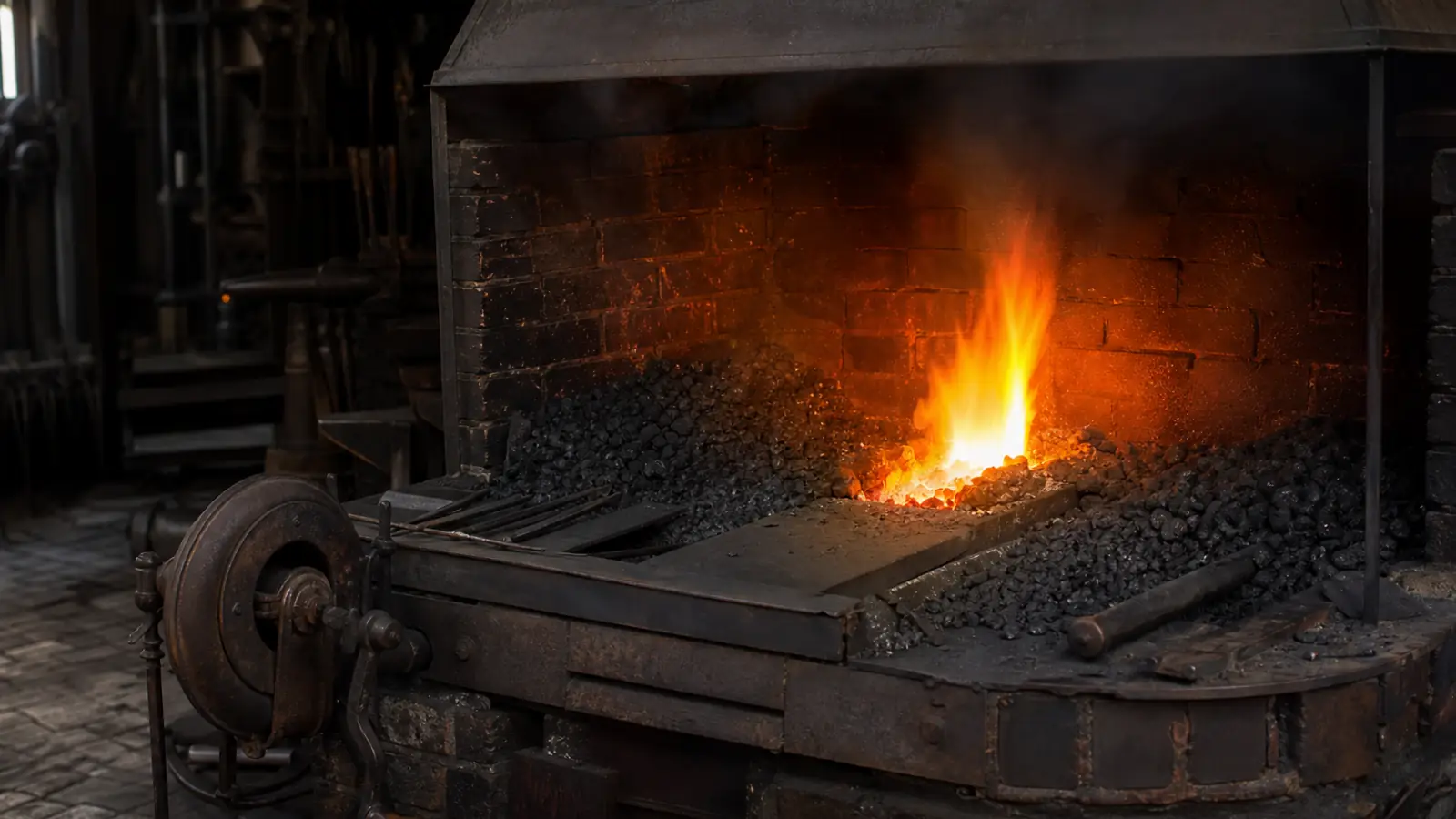
A coal forge burns solid fuel in a firepot - a metal or refractory bowl - while a blower pushes air up through a grate to raise the fire to welding heat. Unlike a gas chamber that heats everything inside it, a coal fire is small and intensely hot at its center. That lets you heat just the spot you want and work stock that is too long, too bent, or too odd to fit inside a propane forge.
For most beginners we still point to gas first: it lights in seconds, runs clean, and is far easier to set up near a workshop. Read our honest propane forge vs coal forge comparison before you commit, and skim the best propane forge for beginners if convenience is your priority. But if you want to learn true fire management, or you plan to forge large or oddly shaped stock, a coal or coke forge earns its keep in a way gas cannot.
The Four Beginner Coal Forge Types
There is no single "best" coal forge - the right one depends on your budget, your space, and whether you want to buy it ready to run or build it. These are the four you will actually run into as a beginner, from most capable to cheapest.
| Type | Firepot depth | Blower | Best for |
|---|---|---|---|
| Cast firepot build | 4-5 in | Hand-crank or electric | Serious, near-daily use |
| Rivet / farrier forge | 2-3 in | Hand-crank | Small stock, portability |
| Portable coal forge | 3-4 in | Electric fan | Ready-to-run first forge |
| Brake-drum DIY | ~3 in | Cheap electric fan | Tightest budget builds |
Compare with propane running cost
Coal Forge to Consider
A ready-made coal forge saves you sourcing a firepot, tuyere, and blower separately. Look for a firepot at least 3-4 inches deep, a clinker breaker or removable grate you can clear, and an ash dump. A shallow decorative pan will fight you the moment you try to bury real stock in the fire.
Rivet-forge coal firepot
~14 x 14 in table
- Weight
- 40 lb
Cast firepot with a clinker breaker and hand or electric blower. Handles any size stock but needs ventilation and fuel sourcing.
Portable coal/coke forge with blower
~16 in table, stand
- Weight
- 55 lb
All-in-one table, firepot and blower. Great for demos and outdoor work; smoke makes it a poor choice for a closed garage.
Blower: Hand-Crank vs Electric
The blower is the heart of the forge, and air control is most of fire control.
- Hand-crank blowers (the classic Champion or Buffalo geared style) give you instant, precise air and need no electricity. You feel the fire respond as you crank. The downside: one hand is busy, and good used units are increasingly collectible.
- Electric blowers (a small squirrel-cage or bathroom-fan-sized unit) free both hands and hold a steady breeze. The catch is that most move far too much air wide open. Always add an air gate or a ball valve on the pipe, or a fan speed control, so you can throttle down - too much air burns fuel fast and eats your steel with scale.
Beginners on a budget do fine with a cheap electric fan plus a simple sliding air gate. If you want to learn to read a fire the traditional way, a hand-crank is worth hunting for.
Fuel: Coal, Coke, and Charcoal
What you burn matters as much as the forge itself.
- Bituminous smithing coal is the traditional choice. It is low-sulfur, low-ash "soft" coal that cokes up into a domed fire and holds heat well. This is what you want for general blacksmithing.
- Coke (coal with the volatiles already cooked off, or metallurgical coke) burns hotter and cleaner with far less smoke, which is friendlier to your neighbors. It is harder to light and needs steady air to stay lit.
- Lump charcoal (real hardwood lump, not compressed briquettes) works in a pinch and lights easily, but burns fast, throws sparks, and needs a deeper fire. Never use briquettes - the binders and fillers ruin your fire.
Sourcing: hardware-store "coal" is usually the wrong high-sulfur stuff. Buy smithing coal or coke by the bag or ton from farrier and blacksmith suppliers such as Centaur Forge, or - often cheapest - through a regional ABANA-affiliate guild that does group buys. Confirm you have a local supply before you buy the forge; running dry with no source nearby is the fastest way to kill the hobby. A gas forge sidesteps this entirely - see our best propane forge for beginners guide.
Space, Firepot Depth, and Setup
A coal forge needs more room and planning than a tabletop gas forge. Budget for a hearth at a comfortable working height (roughly hip level), clearance for long stock to hang past the fire, and a fireproof floor.
Firepot depth is the spec beginners overlook. A general-purpose smithing firepot runs about 4-5 inches deep so you can build a proper fireball and bury stock in the hottest zone. Shallow 2-3 inch rivet and farrier pans are made for small horseshoe work; you can forge with one, but you will struggle to weld or heat anything thick.
Most of your coal-forge kit overlaps with any smithy, so plan the whole bench together with our blacksmith shop setup guide, mount a solid anvil nearby, and keep a beginner hammer and tongs within reach. Coal's biggest payoff is forge welding: the deep, reducing fire of a coal forge makes clean welds at bright-yellow heat easier to reach and hold. Cross-check your colors against the forging temperature table while you learn to read the fire.
Frequently asked questions
Is a coal forge a good choice for a total beginner?
It can be, but gas is usually easier to start with. A coal forge teaches genuine fire management and handles large or oddly shaped stock, but it demands outdoor or chimney ventilation, a fuel supply, and more fire-tending. If you want to light up and get working with minimal fuss, a propane forge is the friendlier first purchase. If learning traditional fire skills excites you, coal is rewarding.
Coal or coke - which should a beginner burn?
Start with low-sulfur bituminous smithing coal. It lights easily and cokes into a domed, forgiving fire, which makes it easier to learn on. Coke burns hotter and much cleaner with far less smoke - great once you can keep a fire alive with steady air - but it is fussier to light. Many smiths run coal that naturally cokes at the edges of the fire, getting the best of both.
Can I use regular charcoal or briquettes in a coal forge?
Real hardwood lump charcoal works in a pinch: it lights fast and is easy to source, but it burns quickly, throws sparks, and needs a deeper fire to reach welding heat. Never use charcoal briquettes - their binders, fillers, and additives foul the fire and contaminate your steel. If you go the charcoal route, build a deeper fuel bed and expect to feed it often.
How deep should the firepot be?
For general blacksmithing, aim for a firepot about 4-5 inches deep. That lets you build a proper ball of fire and bury stock in the hottest, most oxygen-starved zone where welding happens. Shallow 2-3 inch rivet and farrier forge pans are fine for small horseshoe and light work, but you will fight them for anything thick or for forge welding.
Can I run a coal forge in my garage?
Not in a closed one. Coal and coke fires produce carbon monoxide and heavy smoke, and they throw sparks. Run the forge outdoors, or under a properly sized chimney or side-draft hood with strong ventilation and a CO detector nearby. A cracked-open door is not enough. If you only have a closed garage, a well-ventilated propane forge is the far safer path.
How much does coal cost to run compared to propane?
It varies widely by region and how you buy - a bag from a farrier supplier costs far more per pound than a group-buy ton through a local guild. Rather than trust a single figure, price your propane side using our propane forge cost calculator, then compare it against a real quote for smithing coal near you. Fuel access, not just price, often decides which forge makes sense.
Last verified 2026-06. Specs, sizes and market prices change - confirm details on the retailer page before buying.