The Best Blacksmith Hammer for Beginners
Quick answer
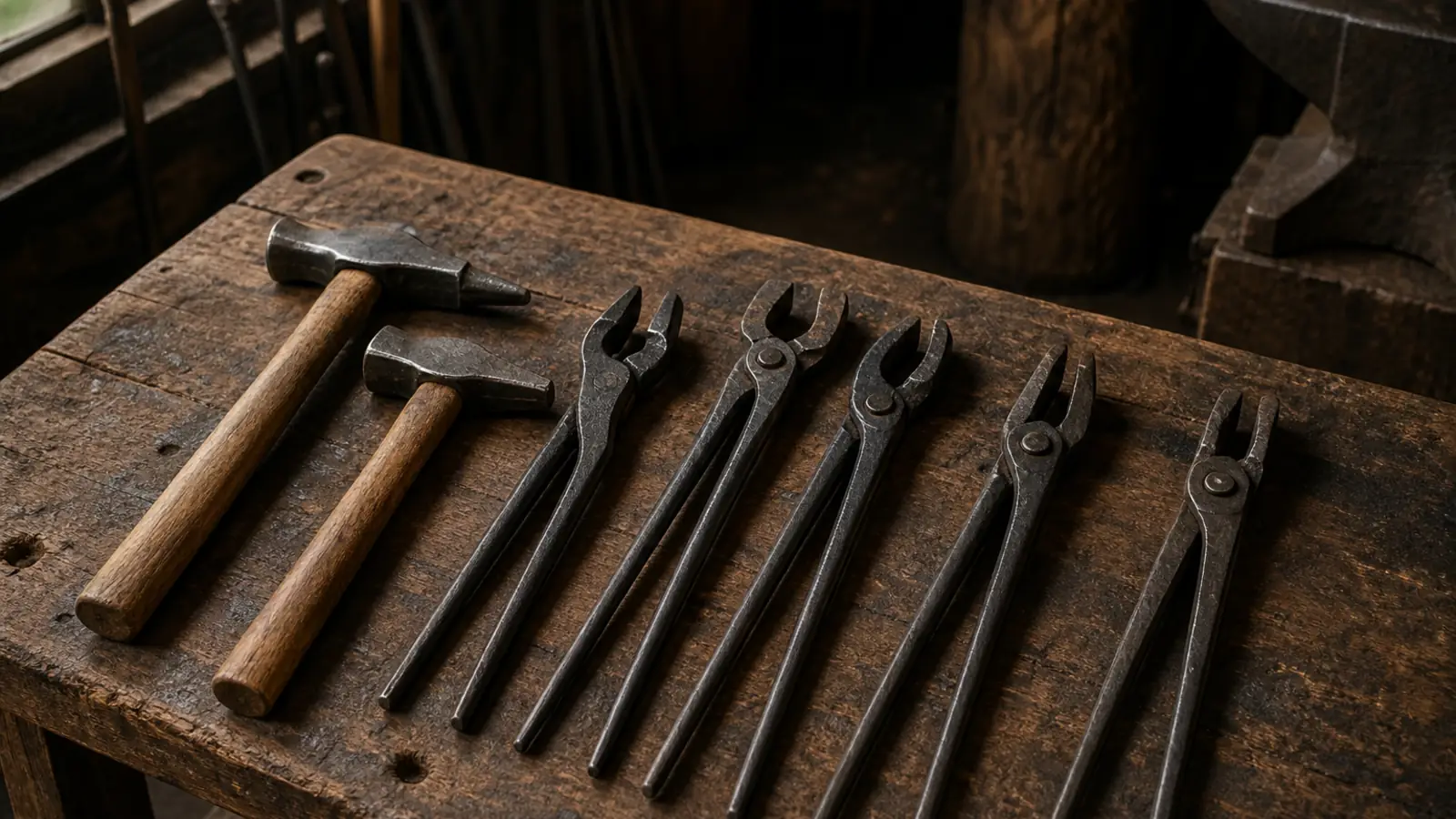
For most beginners the best blacksmith hammer is a 2 lb cross-peen with a hickory handle - light enough to swing accurately for an hour, versatile enough for nearly every project. If you are headed toward knives, a 2.5 lb rounding hammer is the better single choice. Stay in the 1.5-2.5 lb range and dress the face before you forge.
What Actually Matters in a First Hammer
Your first hammer does more work than any other tool on the bench, and the good news is you do not need an expensive one. A plain 2 lb cross-peen with a sound handle and a properly dressed face will carry a beginner from bottle openers to knives to scrolls.
What matters is not the brand stamped on the head but three things: a weight your arm can swing accurately for an hour, a pattern that suits the moving you do most, and a face that is crowned and polished so it does not print dents into your work. Get those three right and almost any decent hammer becomes a good hammer. Get them wrong and even a $150 European pattern will frustrate you.
How Heavy Should a Beginner's Hammer Be?
For most adults starting out, 1.5 to 2.5 lb is the honest range, and 2 lb is the sweet spot. It is tempting to buy heavy - a 3 or 4 lb hammer feels like it will move metal faster - but a hammer you cannot control past the tenth minute moves metal in the wrong places and teaches sloppy blows. Lighter with good technique beats heavy and sloppy every time. A well-placed 2 lb blow lands where you aimed, and you can throw hundreds of them; speed and accuracy move more steel than raw mass.
There is a real health reason to stay light, too. Forging is repetitive impact, and blacksmith's elbow (lateral epicondylitis) and wrist strain are common in people who over-hammer early. Loosen your grip - hold the handle like you are holding a bird, not winning a fight - let the hammer do the falling, and stop when your forearm burns. If you are smaller-framed or have any elbow history, start at 1.5 lb and work up. You can always buy a heavier hammer in six months; you cannot un-injure a tendon in six months. Your hammer weight also sets your anvil weight - a good anvil runs roughly 40-50x your hammer, so a 2 lb hammer pairs happily with a ~66 lb anvil floor.
Blacksmith Hammer Types: Cross-Peen, Rounding, Ball-Peen
Every blacksmith hammer has a flat face for general drawing and finishing, and a shaped peen on the opposite end that concentrates force to move metal in one direction. The pattern name refers to that peen.
- Cross-peen: a blunt wedge set across the handle. It spreads metal sideways (perpendicular to the handle) and is the classic all-purpose smithing pattern - great for drawing out, setting shoulders, and adding texture. This is the single best first hammer for most people.
- Rounding hammer: one flat face and one domed face. The round face is a moving machine - it draws steel and forges bevels fast without leaving sharp edges, which is why bladesmiths reach for it. Slightly more specialized, but a superb do-everything hammer.
- Straight-peen: like a cross-peen rotated 90 degrees; the peen runs parallel to the handle and spreads metal along its length. Useful, but rarely a first buy.
- Ball-peen: a hardware-store machinist's hammer. The round ball is for riveting and cold metalwork, not forging. It is fine for peening rivet heads, but it is not a forging hammer, so do not let a cheap ball-peen be your only tool.
| Pattern | Peen shape | Moves metal | Best for |
|---|---|---|---|
| Cross-peen | Wedge across handle | Sideways (across) | All-around first hammer, drawing out |
| Straight-peen | Wedge along handle | Along the length | Spreading, controlled draws |
| Rounding | One domed face | Fast, edge-free | Bladesmithing, general forging |
| Ball-peen | Round ball | Cold work only | Riveting - not forging |
Match your anvil to this hammer
Two Hammers That Cover Almost Everything
For a first buy we point most beginners at a 2 lb cross-peen; if you already know you are heading toward knives, a 2.5 lb rounding hammer is the better single tool. Both are widely sold with hickory handles at beginner-friendly prices.
Cross-peen hammer 2 lb
13 in handle
- Weight
- 2 lb
- Material
- Forged Steel
- Face (in)
- 1.25
- Handle
- Hickory
Standard beginner weight. Re-hang and dress the face if it arrives with a rough or sharp-edged finish.
Swedish-pattern cross-peen 2.2 lb
14 in handle
- Weight
- 2.2 lb
- Material
- Forged Steel
- Face (in)
- 1.3
- Handle
- Hickory
Slightly heavier head with a crisp peen for drawing out. Comfortable all-day weight for most adults.
Cross-peen hammer 1.5 lb
12 in handle
- Weight
- 1.5 lb
- Material
- Forged Steel
- Face (in)
- 1.1
- Handle
- Hickory
Lighter option if 2 lb tires your wrist or elbow. Better for detail and small knives.
Rounding hammer 2.5 lb
14 in handle
- Weight
- 2.5 lb
- Material
- Forged Steel
- Face (in)
- 1.4
- Handle
- Hickory
Flat face plus rounded face moves metal fast. A favorite general bladesmithing hammer.
Rounding hammer 3 lb
15 in handle
- Weight
- 3 lb
- Material
- Forged Steel
- Face (in)
- 1.5
- Handle
- Hickory
Heavier head for moving more metal per blow. Only pick this if your wrist and elbow are conditioned.
Rounding hammer 2 lb
13 in handle
- Weight
- 2 lb
- Material
- Forged Steel
- Face (in)
- 1.3
- Handle
- Hickory
Lighter rounding hammer for beginners and detail work. Good control while you build technique.
Handles: Material, Fit, and Re-Hanging
Most hammers ship with a hickory handle, which is exactly what you want - it is tough, shock-absorbing, and cheap to replace. Avoid fiberglass for forging: it transmits more shock to your wrist and cannot be reshaped. Treat the handle as a consumable; expect to thin it and eventually re-hang the head.
Two things beginners overlook. First, factory handles are usually too fat and too glossy. Rasp the neck down until it fits your hand and knock off the varnish so it does not raise blisters - a handle you can hold loosely is a handle that spares your elbow. Second, cheap imported hammers sometimes arrive with a loose or poorly seated head. If the head rattles, re-hang it: drive it onto a clean-fitting handle and set a wooden wedge, then a metal wedge across it. A head that flies off mid-swing is a genuine hazard. Check that the head is tight before the first heat, and re-check after the wood dries out over its first few weeks. Once your hammer is sorted you will want tongs to hold hot stock safely.
Dressing the Face So It Doesn't Mark Your Work
This is the step new smiths skip and then blame the hammer for. A face straight from the factory usually has sharp edges and a flat or slightly hollow profile. Sharp edges dig half-moon dents into hot steel that you then spend twenty minutes planishing out. The fix is to dress and crown the face: round over the edges and put a very slight dome on it so only the center contacts the work.
Do it with a file, an angle grinder, and sandpaper, then polish to at least 400 grit - a near-mirror face leaves a cleaner finish on hot steel. Keep the head cool while grinding so you do not ruin the temper of the hardened face; dip it often. Give the flat face a gentle crown, and you can leave the peen with a slightly tighter (but still eased) radius as a second working profile. Fifteen minutes of dressing turns a plain $30 hammer into one that finishes like a much nicer tool. If you would rather not touch a grinder, some makers sell hammers pre-dressed - worth paying up for. A dressed hammer is also part of any decent starter kit worth buying.
Frequently asked questions
What weight blacksmith hammer should a beginner buy?
Stay between 1.5 and 2.5 lb, with 2 lb the best all-around starting weight. A lighter blacksmith hammer you can swing accurately for an hour moves more useful metal than a heavy one that wanders and wrecks your elbow. Smaller-framed smiths, or anyone with wrist or elbow issues, should start at 1.5 lb and add weight later once technique is solid.
Cross-peen or rounding hammer for a beginner?
Either is an excellent first blacksmith hammer. A 2 lb cross-peen is the classic all-purpose choice and slightly cheaper, ideal if you want to try a bit of everything. A 2.5 lb rounding hammer draws steel fast and leaves no sharp edges, so it is the better single tool if you already know you are aiming at knife making.
Can I use a ball-peen hammer for blacksmithing?
Only in a pinch. A ball-peen hammer is a machinist's tool made for riveting and cold metalwork, and its round ball does not move hot steel efficiently. The flat face will get you started, but it is not a forging pattern. If a cheap ball-peen is all you have, use it for now and buy a cross-peen or rounding hammer as your real first hammer.
Do I need to dress a new blacksmith hammer?
Almost always, yes. Most new hammers have sharp face edges that stamp crescent-shaped dents into hot steel. Round the edges, add a slight crown, and polish the face to 400 grit or finer while keeping the steel cool. Fifteen minutes of dressing makes a budget hammer finish like a premium one - or buy a pre-dressed hammer if you would rather skip the grinder.
How does hammer weight relate to anvil weight?
A good working rule is an anvil roughly 40 to 50 times your hammer weight. A 2 lb hammer therefore pairs well with an 80 to 100 lb anvil, though about 66 lb is a common beginner floor for general work. A heavier anvil returns more energy to the steel; too light and it bounces and robs your blows. Use an anvil weight calculator to check your pairing.
Last verified 2026-06. Specs, sizes and market prices change - confirm details on the retailer page before buying.