How to Make Blacksmith Tongs
Quick answer
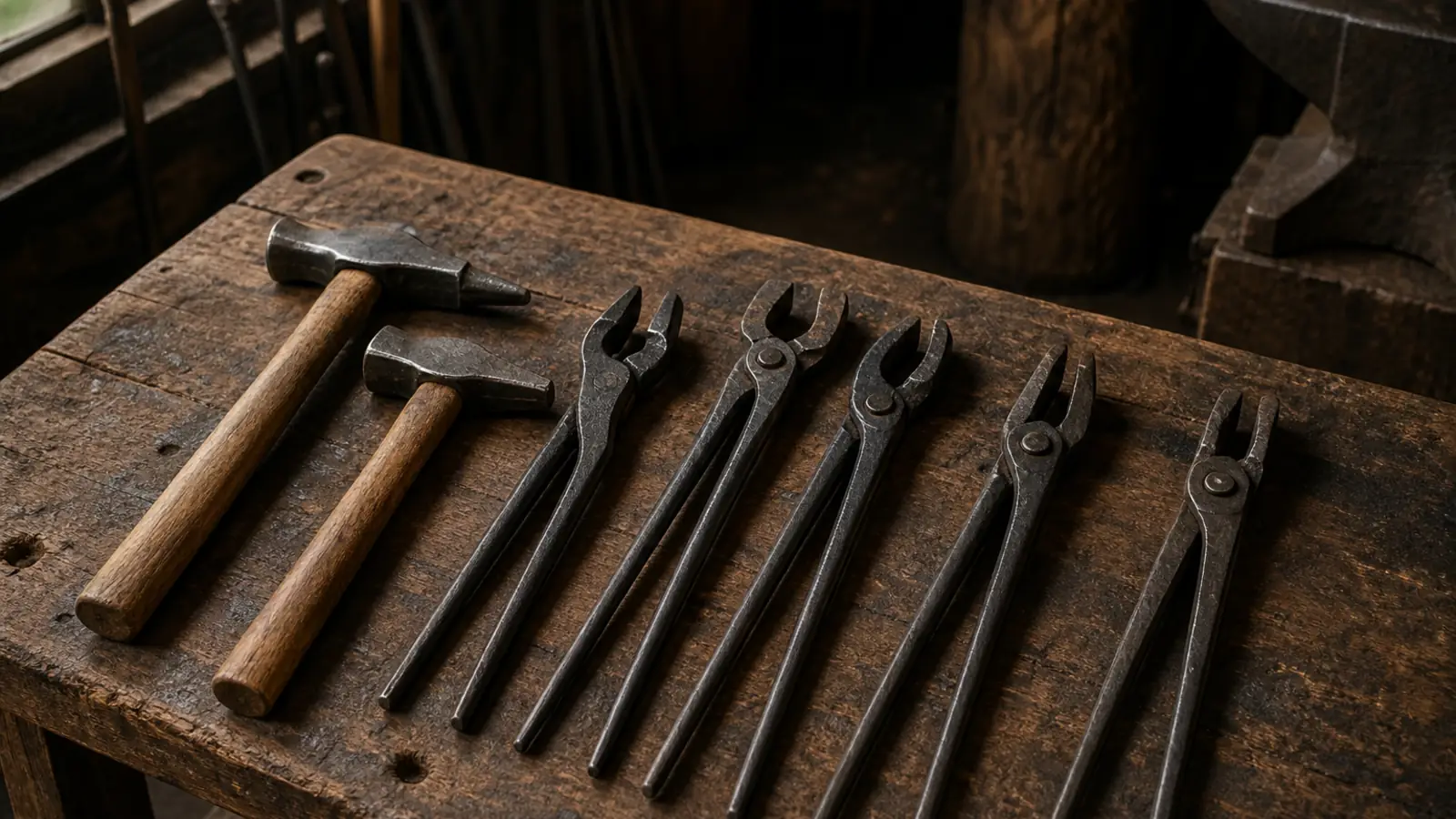
Forge two identical halves from about 1/2 inch square mild steel: flatten the bit, set down the offset boss, then draw the long reins. Punch or drill a rivet hole through each boss, rivet the halves together with a 1/4 inch mild rivet, then heat and bend the jaws until they meet flat. It is a classic rite-of-passage project once you can draw out and punch.
Should you make tongs or just buy a pair?
Making your own tongs is a genuine rite of passage. It forces you to combine drawing out, setting down a shoulder, and punching a clean hole in one project, and at the end you hold a tool you built. That is a real reason to do it.
But here is the honest part: your first pair will probably grip a little crooked, and that is fine. You do not need to make tongs before you can forge anything else. If you are still learning to move steel, buying one good pair to hold your workpieces will make every other project easier and safer. A common path is to buy a starter set, use it to hold the stock while you forge your own tongs, then keep making pairs as you need new jaw shapes. See our picks for the best blacksmith tongs for beginners if you want a reliable pair to start with, and the blacksmith tongs types reference to understand what shape you actually need.
Tongs worth owning while you learn to forge your own
You need at least one pair to hold hot stock steady before you can safely forge a second pair. A flat-jaw or box-jaw pair covers most beginner stock, and a wolf-jaw pair grips round, square, and flat bar in one tool, which makes it the single most versatile option to own early.
Blacksmith tong set (3 piece)
18 in each
- Material
- Forged Steel
- Jaw capacity
- 0.25-0.5 in
Usually a flat-jaw, a v-bit and a wolf-jaw. Fit and finish vary - budget time to adjust the jaws.
Blacksmith tong set (5 piece)
18-20 in
- Material
- Forged Steel
- Jaw capacity
- 0.25-0.75 in
Broader range of jaw shapes for growing projects. Individual quality is lower than buying good tongs one at a time.
Wolf-jaw tongs 3/8 in
18 in
- Material
- Forged Steel
- Jaw capacity
- 0.375 in
The most versatile first tong - grips flat, round and square stock near 3/8 in. May need adjusting on the anvil to seat well.
Wolf-jaw tongs 1/2 in
19 in
- Material
- Forged Steel
- Jaw capacity
- 0.5 in
Same versatile jaw sized for 1/2 in stock. Good second tong once you outgrow 3/8 in.
Stock and steel choice
Use plain mild steel for your first tongs. Around 1/2 inch square is the classic size: it has enough mass for the boss and rivet, but it is small enough to move with a 2 to 2.5 lb hammer. Flat bar around 1/2 by 1/4 inch also works and skips some of the bit-forging, but square stock teaches you more. Buy known mild steel (A36 or 1018) rather than guessing; if you want to double-check what a length weighs before you cut, the steel bar weight chart covers common sizes.
Do not use mystery scrap for tongs, and especially do not use galvanized or zinc-plated bar. Tongs do not need to be hardenable, so there is no reason to gamble on unknown metal that might crack, spark, or give off toxic fumes when heated.
| Part | Typical size | Notes |
|---|---|---|
| Bit stock | 1/2 in square mild | Holds 1/8 to 3/8 in stock well |
| Reins (handles) | 12 to 16 in long | Longer stays cooler, adds leverage |
| Boss thickness | 1/4 to 3/8 in | The flat pad the rivet passes through |
| Rivet | 1/4 in mild round | Step up to 5/16 in for heavier tongs |
| Rivet hole | About 1/32 in over rivet | Punch hot or drill cold |
How the forging goes, part by part
A pair of tongs is two identical halves riveted together, so you forge every step twice. Work at a bright yellow-orange heat and keep your stock hot; if you are unsure what temperature you are hitting, glance at a forging temperature chart until you can read the color by eye.
The bit is the jaw that grips the work. Forge it near the end of the bar by flattening and slightly spreading a short length, leaving a clean shoulder where the bit meets the rest of the stock. Keep the bit thick enough to stay stiff.
The boss is the hinge pad where the rivet lives. Just behind the bit, set down a shoulder on two sides so the boss sits offset from the reins. This offset is what lets two halves nest together and still line the jaws up. Getting the boss square and consistent on both halves is the hardest part of the whole job, so take your time and match them.
The reins are the long handles. From the boss back, draw the remaining bar out long and comfortable. Round or slightly flatten them so they are easy to hold. Longer reins keep your hand away from the heat and give you more clamping force. Once both halves match, you punch the rivet hole and assemble.
Riveting and fitting the jaws
Cut a rivet from 1/4 inch mild round with a little extra length, about one to one and a half times the rivet diameter proud on each side. Pass it through both bosses, then rivet hot: support one end on the anvil (or a bolster) and upset the other end with light, quick hammer blows, working around the head to spread it evenly. The goal is a snug pivot that still moves, not a frozen joint. If it seizes, heat the boss and work the tongs open and closed to free it.
With the rivet set, the jaws almost never line up perfectly on the first try. Heat one bit at a bright heat, close the tongs on a piece of the stock you intend to hold, and gently bend the jaw until both bits meet flat along their length with the reins parallel. Adjust in small steps, re-heating as needed. When the tongs grip a test bar with no rock or gap, you are done. This fitting stage is normal, not a sign you did it wrong.
What to expect, and where to go next
Plan for your first pair to be a learning tool, not a showpiece. Mismatched bosses, slightly off jaws, and a stiff rivet are all normal, and each pair you make comes out cleaner. Once you can forge flat-bit tongs, the same steps let you shape box jaws, v-bits, or wolf jaws for specific stock. If you want a broader set of skill-builders to practice drawing and punching, our beginner blacksmith projects list has more, and dialing in your shop setup with a solid anvil and vise makes tong-making far easier.
Check your stock's forging heat
How to forge a pair of simple flat-bit blacksmith tongs
- Cut stock and mark the bit Cut two equal lengths of about 1/2 inch square mild steel, allowing extra for the bit and reins. At a bright yellow-orange heat, mark and forge the bit at one end by flattening and lightly spreading a short section, leaving a clean shoulder where the bit meets the bar.
- Set down the boss Just behind the bit, set down a shoulder on two sides to create the offset boss where the rivet will pass. This offset lets the two halves nest and keep the jaws aligned. Match the boss size and offset on both halves as closely as you can; consistency here decides how well the finished tongs grip.
- Draw out the reins From the boss back, draw the remaining bar into a long rein, about 12 to 16 inches, rounding or lightly flattening it so it is comfortable to hold. Repeat every step so far on the second half so you end up with two matching pieces.
- Punch or drill the rivet hole Make a rivet hole through the center of each boss, roughly 1/32 inch larger than your 1/4 inch rivet. Punch it hot over a bolster or pritchel hole for a stronger boss, or drill it cold for simplicity. Deburr both holes and test that the rivet slides through cleanly.
- Rivet the two halves together Cut a rivet from 1/4 inch mild round, leaving about one to one and a half diameters proud on each side. Pass it through both bosses, support one end, and upset the other with light, quick blows, working around the head so the joint is snug but still pivots freely.
- Heat and adjust the jaws to grip flat Close the tongs on a piece of your intended stock, heat one bit at a bright heat, and gently bend the jaw until both bits meet flat along their length with the reins parallel. Adjust in small steps, re-heating as needed, until the tongs hold a test bar with no rock or gap.
Frequently asked questions
What steel should I use to make blacksmith tongs?
Plain mild steel such as A36 or 1018, in about 1/2 inch square, is the standard choice. Tongs do not need to harden, so a tough, forgiving low-carbon steel is ideal. Avoid unknown scrap and never use galvanized or zinc-plated bar, which can crack unpredictably and release toxic fumes when heated to forging temperature.
How long should the reins be?
Most beginner tongs run about 12 to 16 inches from the boss to the end of the reins. Longer reins keep your hand farther from the heat and give you more clamping leverage, which is helpful when holding heavier stock. Shorter reins feel nimble but transfer heat to your hand faster, so err on the longer side for a first pair.
What size rivet do I need for tongs?
A 1/4 inch mild steel round rivet suits typical light tongs made from 1/2 inch stock. Step up to 5/16 inch for heavier tongs or thicker bosses. Punch or drill the hole only about 1/32 inch larger than the rivet so the pivot is snug, and leave the rivet roughly one to one and a half diameters proud on each side to head it over.
Should I punch or drill the rivet hole?
Punching hot is stronger because it pushes metal aside instead of removing it, leaving more meat around the hole. But drilling cold is a perfectly reasonable beginner shortcut and much easier to keep centered. Whichever you choose, deburr the hole and confirm the rivet slides through both halves before your final assembly heat.
Why do my tong jaws not line up?
Almost no pair lines up straight off the rivet, so this is expected. Heat one bit, close the tongs on the stock you plan to hold, and gently bend the jaw until both bits meet flat with the reins parallel. Adjust in small steps and re-heat as needed. Slightly mismatched bosses on the two halves are the usual cause.
Is it worth making tongs or should I just buy them?
Both. Making tongs is an excellent skill-builder that combines drawing, setting down, and punching, but you also need at least one solid pair to hold hot stock safely while you forge. Many smiths buy one good beginner pair first, use it to hold the workpiece, then forge additional pairs as they need new jaw shapes.
Last verified 2026-06. Specs, sizes and market prices change - confirm details on the retailer page before buying.