Blacksmith Tongs Types
Quick answer
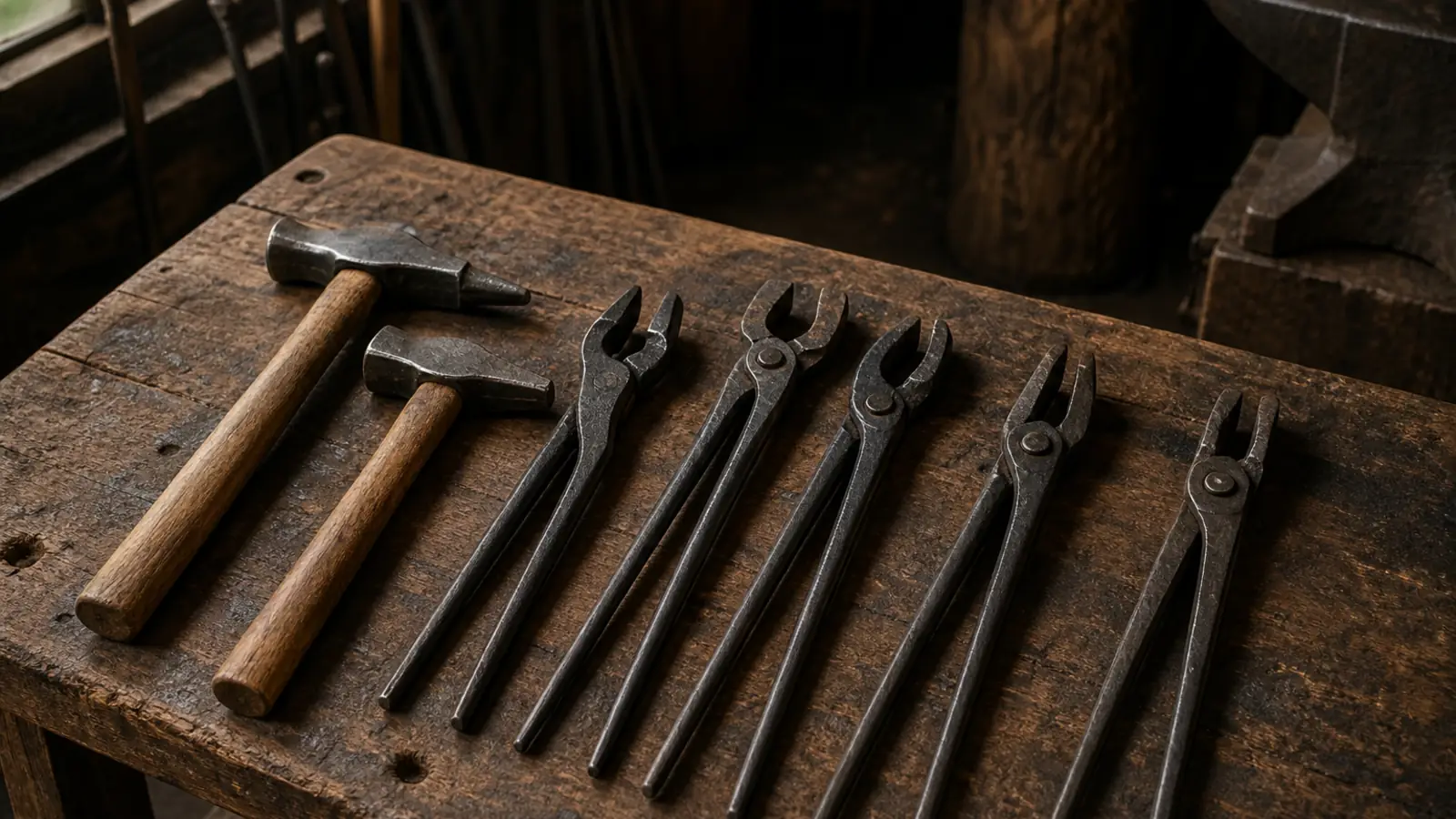
Blacksmith tongs are grouped by jaw shape, and each shape grips a specific stock profile. Wolf-jaw tongs are the best all-around first pair, holding flat, round, and square bar; v-bit tongs self-center round and square stock. Flat-jaw, box-jaw, bolt, scroll, and hollow-bit tongs each solve narrower jobs. Match the jaw size to your stock, and fit new tongs before trusting them.
Match the Tongs to the Work
Tongs are how you hold hot steel safely, and the single biggest beginner mistake is trying to make one pair do everything. A tong's jaws are shaped to grip a specific stock profile - flat bar, round rod, or square - within a specific size range. When the jaws match the stock, the piece sits still and you can hammer with confidence. When they don't, the work pivots, slips, or shoots out of the fire, which is both frustrating and dangerous.
This page breaks down the common blacksmith tongs types, what each grips, and which ones a beginner actually needs first. For current picks and buying advice, see our best blacksmith tongs guide - this is the reference companion that explains the jaw shapes so you know what you are choosing between.
| Tong type | Grips | Best for | Beginner pick |
|---|---|---|---|
| Flat-jaw | Flat bar, sheet | Flat stock, wide tapers | Later |
| Wolf-jaw | Flat, round, square | All-around first pair | Yes |
| V-bit | Round, square | Self-centering round/square | Yes |
| Box-jaw | Square, some round | Holding square stock | Later |
| Bolt / pick-up | Round bar, bolt heads | Grabbing bar ends fast | Optional |
| Scroll | Curved / scroll | Bending scrollwork | No |
| Hollow-bit | Round rod | Dedicated round stock | No |
Featured Tong Types for Beginners
Three shapes cover most first projects: an all-round wolf-jaw pair, a self-centering v-bit pair, and a multi-pair set if you would rather not buy piecemeal. Cards and current options load automatically below - choose by the stock you forge most, not by the lowest price.
Wolf-jaw tongs 3/8 in
18 in
- Material
- Forged Steel
- Jaw capacity
- 0.375 in
The most versatile first tong - grips flat, round and square stock near 3/8 in. May need adjusting on the anvil to seat well.
Wolf-jaw tongs 1/2 in
19 in
- Material
- Forged Steel
- Jaw capacity
- 0.5 in
Same versatile jaw sized for 1/2 in stock. Good second tong once you outgrow 3/8 in.
V-bit bolt tongs 1/2 in
18 in
- Material
- Forged Steel
- Jaw capacity
- 0.5 in
V-shaped jaws self-center round and square bar. Great for tapers and bolt/rivet work.
V-bit tongs 3/4 in
20 in
- Material
- Forged Steel
- Jaw capacity
- 0.75 in
Larger V-bit for heavier round and square stock. Check that jaws close evenly on your bar size.
Blacksmith tong set (3 piece)
18 in each
- Material
- Forged Steel
- Jaw capacity
- 0.25-0.5 in
Usually a flat-jaw, a v-bit and a wolf-jaw. Fit and finish vary - budget time to adjust the jaws.
Blacksmith tong set (5 piece)
18-20 in
- Material
- Forged Steel
- Jaw capacity
- 0.25-0.75 in
Broader range of jaw shapes for growing projects. Individual quality is lower than buying good tongs one at a time.
Which Tongs to Buy First
For most beginners, a single pair of wolf-jaw tongs plus a v-bit pair covers the majority of early work. Wolf-jaw tongs have a stepped, multi-grooved jaw that holds flat, round, and square stock reasonably well, which is why they are the classic all-rounder. V-bit tongs have a V-shaped groove that self-centers round and square bar, so a tapered spike or a round punch stays put while you work.
A budget blacksmithing starter kit sometimes bundles a serviceable pair, but kit tongs are often sized for heavier stock than the thin bar most beginners actually use. Hold off on specialty shapes - flat-jaw, box-jaw, scroll, and hollow-bit - until a project demands them, because buying them early means money spent on tools that sit on the rack. Match your first tongs to your first projects - hooks, S-hooks, bottle openers, and small tapers from 1/4 to 1/2 inch stock listed in our first projects tools list - and expand as your work does.
Fitting and Adjusting Tongs
Tongs almost never arrive perfectly fitted, and a poor fit is the top reason beginners fight their work. To check fit, close the tongs on a cold piece of your target stock and look at the jaw contact: you want the bit to grip along its full length, not just at the tip or the heel. If it only touches at one end, the piece will rock under the hammer.
You can fit tongs yourself, and it is normal shop practice, not a repair. Heat the jaws to an orange heat, clamp the tongs closed on a piece of the correct stock held in your post vise, and let the hot jaws conform to the bar. Then check the rivet: it should be tight enough that the jaws move under firm hand pressure but hold their position, so the tongs feel like an extension of your hand rather than a hinge that flops open.
A good grip also means the reins sit close together in your palm. That lets you secure a heat with a simple tong ring or clip instead of crushing the reins shut every time, which saves your hand over a long session at the fire.
Jaw Size vs Stock Size
Every tong is cut for a stock range, and both undersized and oversized jaws cause slipping. A pair made for 1/2 inch square will not securely hold 1/8 inch flat, and forcing it invites a hot bar to twist loose. As a rule, buy tongs sized to the stock you use most and expect to own two or three sizes as you progress.
Round versus square matters just as much as size. V-bit and box-jaw tongs center square bar cleanly, while flat-jaw tongs are built for flat and sheet - hold round bar in flat jaws and it rolls. Tongs are one leg of the beginner tool set alongside a good hammer and hardy tooling; when a grip feels wrong, the fix is usually a different tong, not a tighter squeeze. Keep a couple of sizes on the rack as your shop grows.
Frequently asked questions
What blacksmith tongs should a beginner buy first?
Start with one pair of wolf-jaw tongs and one pair of v-bit tongs. Wolf-jaw tongs hold flat, round, and square stock, so they cover most early projects, while v-bit tongs self-center round and square bar. Buy them sized for the stock you use most - usually 1/4 to 1/2 inch - and add specialty shapes only when a project actually needs them.
What is the difference between wolf-jaw and v-bit tongs?
Wolf-jaw tongs have a stepped, multi-grooved jaw that grips flat, round, and square stock with reasonable security, making them the all-around choice. V-bit tongs have a single V-shaped groove that self-centers round and square bar, holding it dead center so it does not roll. Wolf-jaw is the versatile first pair; v-bit is the specialist you reach for on round and square work.
What are flat-jaw tongs used for?
Flat-jaw tongs have smooth, flat bits made to grip flat bar and sheet stock along the wide face. They excel at holding tapers, leaves, and knife blanks where you want even contact across a flat surface. They are a poor choice for round bar, which rolls in the smooth jaws, so most beginners add them after a wolf-jaw and v-bit pair rather than first.
Do I need box-jaw tongs?
Not at first. Box-jaw tongs wrap around three or four sides of square stock, giving a very secure grip that resists twisting - handy for heavy square bar or long twisted work. For beginner projects in light stock, wolf-jaw or v-bit tongs are usually enough. Add box-jaw tongs when you start forging larger square stock or notice square bar slipping in your general-purpose tongs.
Can one pair of tongs do everything?
No pair truly does everything, but wolf-jaw tongs come closest because their stepped jaw grips flat, round, and square stock. The limit is size: a single pair only fits one stock range well. Undersized or oversized bar will slip or twist. Plan on owning a few sizes and at least a v-bit pair, and match each pair to the work rather than forcing one tong to hold every job.
Last verified 2026-06. Specs, sizes and market prices change - confirm details on the retailer page before buying.