Blacksmith Hammer Types Explained
Quick answer
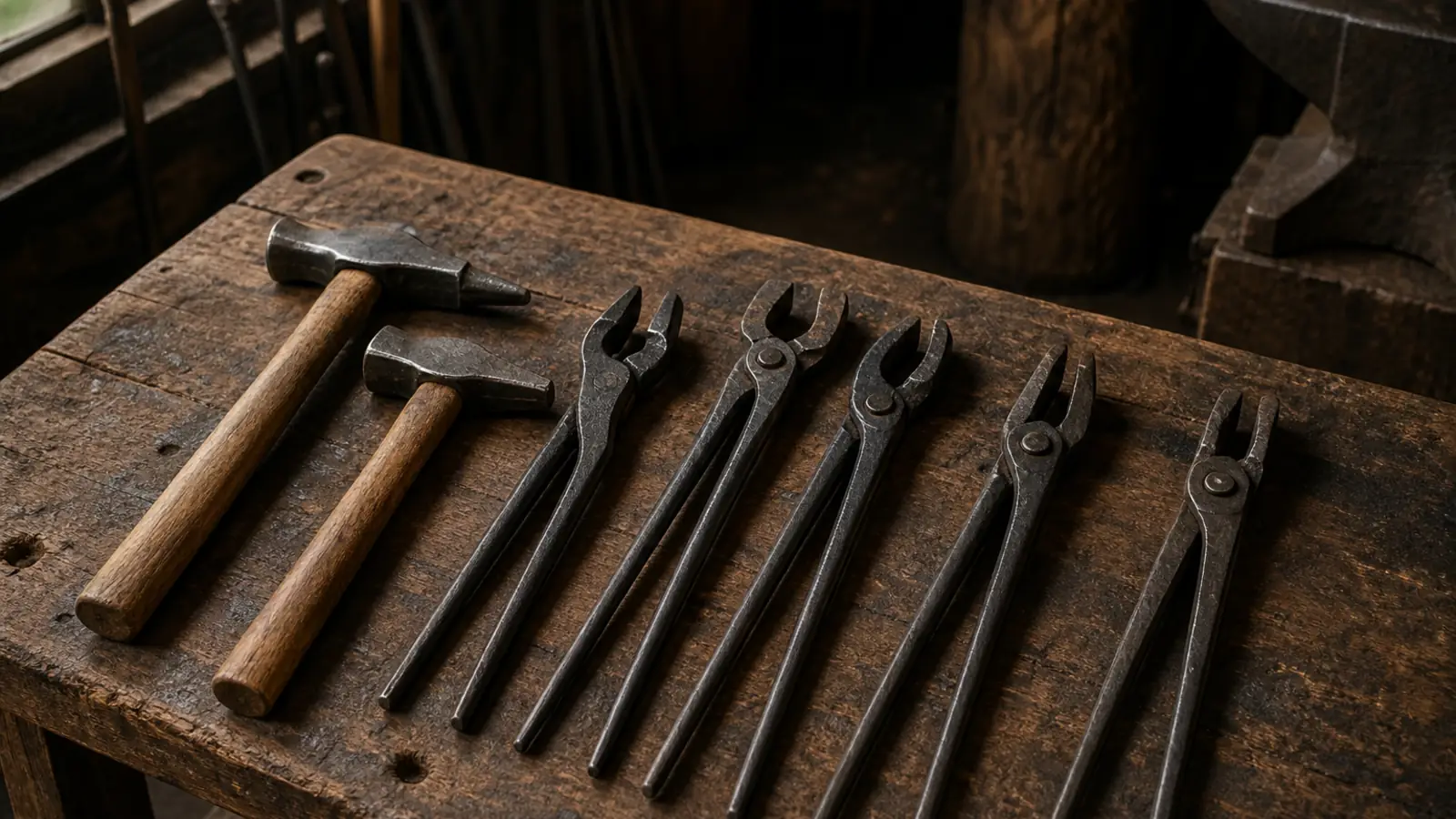
For most beginners the workhorse is a 2 lb cross-peen; add a 2 to 2.5 lb rounding hammer as your skills grow. The cross-peen's wedge moves metal in one direction for drawing out and spreading, while the round face smooths and the rounding hammer's slightly domed face moves steel fast. Ball-peen and straight-peen hammers fill niche roles.
The Main Blacksmith Hammer Types
A blacksmith hammer is just a controlled way to move hot steel, and each type is shaped to move it in a particular direction. The face (the flat striking surface) does most of the smoothing and general forging, while the peen (the shaped end opposite the face) is a specialized tool for spreading, drawing, or texturing metal without flipping the workpiece constantly.
For a beginner, the honest truth is that you need exactly one good hammer to start, and almost everyone should start with a cross-peen. This page is a reference to the full family of hammers so you understand what each does and when a second hammer actually earns its place on your rack. If you just want a purchase recommendation, see our best blacksmith hammer for beginners guide; if you are assembling a whole kit, the starter kit picks cover hammer, tongs, anvil, and forge together.
| Hammer | Peen / face | Typical weight | Best for |
|---|---|---|---|
| Cross-peen | Wedge across the handle + flat face | 1.5-2.5 lb | Drawing out, spreading, general forging |
| Straight-peen | Wedge in line with the handle + flat face | 1.5-2.5 lb | Drawing along the bar, fullering |
| Rounding | Domed face + flat/radiused face | 2-3 lb | Fast metal moving, knife bevels |
| Ball-peen | Round ball + flat face | 8 oz-2 lb | Riveting, peening (not real forging) |
| Sledge / striking | Two flat faces, long handle | 4-12 lb | Heavy work with a striker |
| Hofi / ergonomic | Angled cross or rounding face | 2-3 lb | Reduced wrist and elbow strain |
Size your anvil to your hammer
Two Hammers That Cover Almost Everything
If you buy just one, make it a 2 lb cross-peen; the rounding hammer is the natural second purchase once you start forging bevels and moving metal fast. Both are widely available in beginner-friendly weights.
Cross-peen hammer 2 lb
13 in handle
- Weight
- 2 lb
- Material
- Forged Steel
- Face (in)
- 1.25
- Handle
- Hickory
Standard beginner weight. Re-hang and dress the face if it arrives with a rough or sharp-edged finish.
Swedish-pattern cross-peen 2.2 lb
14 in handle
- Weight
- 2.2 lb
- Material
- Forged Steel
- Face (in)
- 1.3
- Handle
- Hickory
Slightly heavier head with a crisp peen for drawing out. Comfortable all-day weight for most adults.
Cross-peen hammer 1.5 lb
12 in handle
- Weight
- 1.5 lb
- Material
- Forged Steel
- Face (in)
- 1.1
- Handle
- Hickory
Lighter option if 2 lb tires your wrist or elbow. Better for detail and small knives.
Rounding hammer 2.5 lb
14 in handle
- Weight
- 2.5 lb
- Material
- Forged Steel
- Face (in)
- 1.4
- Handle
- Hickory
Flat face plus rounded face moves metal fast. A favorite general bladesmithing hammer.
Rounding hammer 3 lb
15 in handle
- Weight
- 3 lb
- Material
- Forged Steel
- Face (in)
- 1.5
- Handle
- Hickory
Heavier head for moving more metal per blow. Only pick this if your wrist and elbow are conditioned.
Rounding hammer 2 lb
13 in handle
- Weight
- 2 lb
- Material
- Forged Steel
- Face (in)
- 1.3
- Handle
- Hickory
Lighter rounding hammer for beginners and detail work. Good control while you build technique.
How to Choose Weight and Feel
Weight is the decision beginners get wrong most often. A heavy hammer feels productive for five minutes, then wrecks your accuracy and your elbow for a week. For general forging, 1.5 to 2.5 pounds is the sweet spot for adult hands; most people settle on 2 lb (about 0.9 kg). Save 3 lb and up for when your technique and forearm can drive it cleanly, and leave 4 lb and heavier to sledges swung by a striker.
Your hammer weight also sets a floor for your anvil. A common rule is that the anvil should weigh roughly 40 to 50 times the hammer, so a 2 lb hammer pairs with an 80 to 100 lb anvil for efficient rebound; you can run the numbers with our anvil weight calculator and cross-check against the beginner anvil guide. Grip matters as much as mass: hold the hammer near the end of the handle, let it rebound, and let the tool do the work. If your hand cramps or the face lands off-square, the hammer is too heavy or the handle is too fat.
Dressing and Maintaining the Face
A brand-new hammer is almost never ready to forge with. Factory faces often ship with sharp edges and a flat, slightly rough surface that will stamp ugly marks into hot steel. Dressing the face means grinding a gentle crown (a very slight dome) and radiusing the edges so the hammer leaves smooth work instead of half-moon dents.
- Round the edges: put a small, even radius on all four edges of a flat face so no sharp corner can dig in.
- Crown lightly: a barely perceptible dome lets you move metal without leaving flat-facet marks.
- Polish it: work up to a 400-grit or finer finish; a near-mirror face transfers cleanly and releases scale.
- Keep handles tight: check the wedge and re-seat or re-hang a loose head before it can fly off.
Do the grinding with light passes and frequent cooling so you do not overheat and soften the hardened face. Once dressed, a good hammer needs little more than an occasional edge touch-up. The same care applies to your hardy tools and top tools; the hardy tools explainer covers those.
Pattern Styles: Swedish, German, Czech, and Hofi
Beyond the basic shapes, hammers come in regional patterns that change how the head is balanced and where the mass sits:
- Swedish cross-peen: a light, elegant pattern with a narrow peen, popular for detailed and lighter work.
- German cross-peen: a chunkier head with more mass behind the face, favored for moving material.
- Czech pattern: a compact, high-mass design that many bladesmiths like for fast, controlled forging.
- Hofi-style ergonomic: an angled face and thick handle designed by Uri Hofi to reduce wrist and elbow strain; excellent but pricier.
None of these is required to learn. A plain, well-dressed 2 lb cross-peen forges everything a beginner will attempt, from hooks and leaves to your first knife bevels. As you take on beginner forging projects and figure out what you enjoy, you will feel which pattern and weight suit your hand. Pair the right hammer with the right holding tools too; our tongs types reference helps you match jaws to your stock.
Frequently asked questions
What is the best blacksmith hammer for a complete beginner?
A 2 lb (about 0.9 kg) cross-peen is the standard first hammer. Its flat face handles general forging and smoothing while the wedge-shaped peen draws and spreads metal without constantly reflipping the work. It is versatile enough to learn every fundamental skill on. See our best blacksmith hammer guide for specific picks and weight options.
What is the difference between a cross-peen and a straight-peen hammer?
The only difference is peen orientation. A cross-peen's wedge runs perpendicular (across) the handle, so it spreads metal side to side relative to your grip. A straight-peen's wedge runs parallel (in line) with the handle, spreading metal along the length of the bar. Cross-peens are far more common for general work; straight-peens shine for fullering and drawing along a piece.
What is a rounding hammer used for?
A rounding hammer has one slightly domed (convex) face and usually a second flat or radiused face. The domed face moves hot steel quickly and is a favorite for forging knife bevels and rough shaping, while the flatter face planishes and smooths. Many bladesmiths use a 2 to 2.5 lb rounding hammer as their primary tool once they are past the basics.
Can I use a ball-peen hammer for blacksmithing?
A ball-peen hammer will move hot steel in a pinch, but it is not designed for forging. The rounded ball is meant for peening rivets and shaping metal in cold metalwork, and the small face makes controlled forging tiring. It is fine to start with one you already own, but a cross-peen will be far more capable once you are ready to invest.
How heavy should a blacksmith sledge or striking hammer be?
Striking hammers and sledges used with a helper (a striker) typically run 4 to 12 lb (about 1.8 to 5.4 kg). They are swung two-handed or by a second person onto stock a smith holds and positions. Solo beginners rarely need one; heavy shaping can wait until you have a partner and the technique to place blows safely.
Do I need to dress a new hammer face before forging?
Yes. Most new hammers ship with sharp edges and a flat, rough face that leaves marks in hot steel. Grind a small radius on the edges, add a very slight crown, and polish the face to roughly 400 grit. Use light passes and keep the head cool so you do not draw the temper and soften the hardened striking face.
Last verified 2026-06. Specs, sizes and market prices change - confirm details on the retailer page before buying.