Anvil Parts and Terminology
Quick answer
An anvil isn't one work surface - it's several, each with a job. On a London-pattern anvil the horn bends curves, the flat hardened face does most forging, the softer step lets you cut without nicking the face, and the hardy and pritchel holes hold and back up tools. Learn the parts and both your buying and your technique get easier.
The London-Pattern Anvil, Part by Part
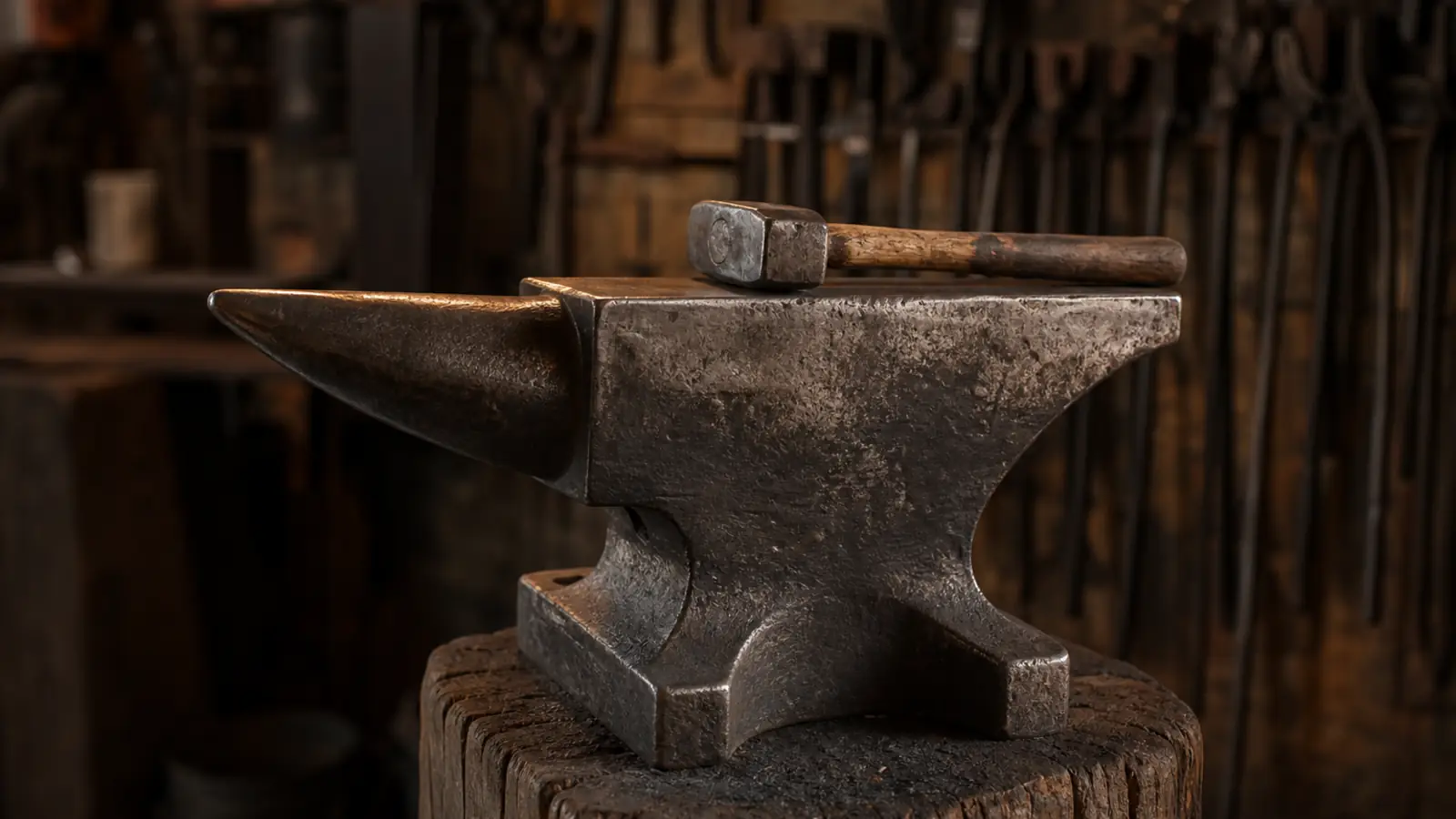
Most anvils sold to beginner blacksmiths in the US follow the London pattern (sometimes called the English pattern) - the classic silhouette with a single cone-shaped horn on one end, a long flat top, and a squared heel. It became the standard because the shape packs a bending surface, a forging surface, a cutting shelf, and two tool-holding holes into one tool.
Every part has a specific job, and knowing them changes how you work and what you buy. When a tutorial says "draw it out over the horn" or "set your hardy in the hole," this is the vocabulary they mean. If a term here is new, our blacksmithing glossary covers the verbs - draw out, upset, fuller, drift - that go with these parts.
| Part | What it is | What it's for |
|---|---|---|
| Horn | Round tapering cone at the front, usually left softer | Bending curves, rings, hooks; drawing out over the curve |
| Face | Flat, hardened top surface | The main forging surface - keep it clean and unmarked |
| Step / cutting table | Soft shelf set just below the face | Shearing hot stock so you don't nick the hardened face |
| Hardy hole | Square hole near the heel (approx 3/4-1 in) | Holds square-shank bottom tools: cutters, fullers, swages |
| Pritchel hole | Round hole beside the hardy (approx 3/8-1/2 in) | Backs up punching so the slug drops through; light bending |
| Waist | Narrow, pinched section under the face | Structural - connects the face mass to the base |
| Heel | Squared rear end of the face | Carries the hardy/pritchel holes; light bending and forming |
| Feet / base | Wide bottom flats | Bolting or strapping the anvil to its stand |
Horn, Face, and Step: the three surfaces you'll use most
The horn is the round, tapering cone at the front. It is your bending and curving surface: you hammer stock over it to make rings, hooks, and scrolls, and to draw out (lengthen) bar by working it across the curve. The horn is usually left softer than the face so it can take abuse without cracking.
The face is the flat, hardened top - the main event. Nearly all your forging happens here, and a good face is heat-treated hard so it returns energy to the hammer instead of denting. Keep it clean: no grinding on it, no cutting directly on it, and knock off scale so it isn't hammered into the surface. Dents and gouges telegraph straight into your work.
Between the horn and the face sits the step (also called the cutting table). It is a shelf set slightly lower than the face and left soft on purpose. Use it to shear hot stock with a chisel or hot cut so your blade finishes against soft steel instead of nicking your hardened face. It is not a hammering surface - never forge heavy on the step.
The hardy hole and pritchel hole
Toward the heel you'll find two holes. The hardy hole is square (commonly 3/4 inch to 1 inch on a mid-size anvil) and holds bottom tools by their square shanks - hardy cutters, bending forks, fullers, swages, and bickerns. Because tool shanks are sized to it, the hardy hole size is a real buying spec; check our hardy hole sizes reference and the hardy tools explained guide before you buy tooling.
The pritchel hole is round (often about 3/8 to 1/2 inch) and sits near the hardy hole. Its main job is to give punched holes somewhere to go: you punch hot stock over it so the slug drops through cleanly, and it doubles as a light bending and holding point. The waist is the narrow, pinched section under the face, and the feet or base are what you bolt or strap down to your stand.
A Solid First Anvil
A hardened steel face, a usable horn, and clean, square holes matter more than sheer size when you're starting out. A cast-steel anvil around 66 lb (30 kg) is a common, honest first anvil: heavy enough to forge small hooks, blades, and hardware, light enough to move and mount on a stand, and priced within reach. Cast steel is not the same as a soft cast-iron ASO - it's heat-treated to give real rebound off the face.
Cast-steel anvil 66 lb
19 x 4 x 10 in
- Weight
- 66 lb
- Material
- Cast Steel
- Hardness
- ~50 HRC
- Face (in)
- 3.9 x 9.8
- Hardy hole
- 1 in
Popular beginner weight. Ring and rebound vary by batch - test rebound with a ball bearing if you can.
Cast-steel anvil 55 lb
17 x 3.5 x 9 in
- Weight
- 55 lb
- Material
- Cast Steel
- Hardness
- ~48 HRC
- Face (in)
- 3.5 x 9
- Hardy hole
- 0.9 in
Light and portable but bounces on light stands. Bolt it down or mount to a heavy stump.
Cast-steel anvil 70 lb
20 x 4 x 10 in
- Weight
- 70 lb
- Material
- Cast Steel
- Hardness
- ~52 HRC
- Face (in)
- 4 x 10
- Hardy hole
- 1 in
A little more mass than the 66 lb for a similar price. Marketing hardness claims are often optimistic.
London pattern vs. other anvil styles
- London / English pattern: one horn, squared heel, hardy and pritchel holes. This is the all-round beginner and general-smith anvil, and the shape most tutorials assume.
- Farrier / horseshoe pattern: lighter, with clips and a turning cam for shaping shoes. Great for hoof work, less ideal as a general forging anvil.
- Double-horn (German / Austrian) pattern: a round horn on one end and a squared (pyramid) horn on the other, popular in Europe. The square horn is handy for bending inside corners; these are excellent anvils but often pricier and less common used in the US.
- ASO (anvil-shaped object): cheap cast-iron shapes sold as "anvils." They look right but are soft, dead under the hammer, and often chip or crack. A real anvil is steel - cast or forged - with a hardened face.
If your budget is tight, a small real anvil beats a big ASO. Before spending, it's worth comparing a genuine cast vs. forged anvil and even a railroad-track anvil against a real anvil.
What the parts tell you before you buy
Judge an anvil by the parts that actually do the work:
- Face condition and rebound. Drop a 1-inch ball bearing from about 10 inches onto the face; on a good hardened face it bounces back 70% or more. A dead, thuddy bounce usually means a soft or worn face - or an ASO. Look for deep gouges, big chips off the edges, and sway (a dished-out face).
- Weight. Beginners are well served by roughly 70-150 lb; heavier moves metal better but costs more and is harder to move. To match weight to your work and stand, our anvil weight calculator helps you think it through.
- Hardy hole size. Match it to tooling you'll actually buy, and confirm it's clean and square.
- Pattern. For general beginner forging, a London-pattern anvil is the safe default; pick a specialty pattern only if your work demands it.
For specific picks that check these boxes, see our best beginner anvil roundup and budget anvil guide.
Frequently asked questions
What are the main parts of an anvil?
An anvil's main parts are the horn (the round front cone for bending and drawing curves), the face (the flat hardened top where most forging happens), the step or cutting table (a soft shelf for shearing without nicking the face), the hardy hole (square, holds bottom tools), the pritchel hole (round, for punching), the waist, and the feet or base. On a London-pattern anvil the squared rear end is the heel.
What is the step on an anvil for, and why not cut on the face?
The step is a soft shelf set just below the face, between the face and the horn. Use it to cut hot stock with a chisel or hot cut so the blade finishes against soft steel. Cutting directly on the hardened face nicks and dents it, and those marks print into every piece you forge afterward. Never do heavy hammering on the step - it isn't hardened for it.
What's the difference between the hardy hole and the pritchel hole?
The hardy hole is square and larger, sized to hold the square shanks of bottom tools like cutters, fullers, swages, and bending forks. The pritchel hole is round and smaller; its main job is to back up punching so the punched slug drops through cleanly, and it serves as a light bending point. Match the hardy hole to the tooling you intend to buy, since shanks are cut to fit it.
What is an ASO?
ASO stands for anvil-shaped object - a cheap cast-iron casting sold to look like an anvil. It has the silhouette but not the metallurgy: cast iron is soft and dead under the hammer, so it absorbs your blows instead of returning them, and the edges chip. A real anvil is cast or forged steel with a hardened face that rebounds. A small real anvil out-works a big ASO every time.
What is a London-pattern anvil?
The London (or English) pattern is the classic anvil shape: a single cone-shaped horn on one end, a long flat hardened face, a soft cutting step, and hardy and pritchel holes near the squared heel. It's the general-purpose design most US beginner anvils follow and the one tutorials assume. Other patterns - farrier, German double-horn - specialize the shape for specific trades.
Last verified 2026-06. Specs, sizes and market prices change - confirm details on the retailer page before buying.