The Best Budget Anvil for Blacksmithing (Without Buying an ASO)
Quick answer
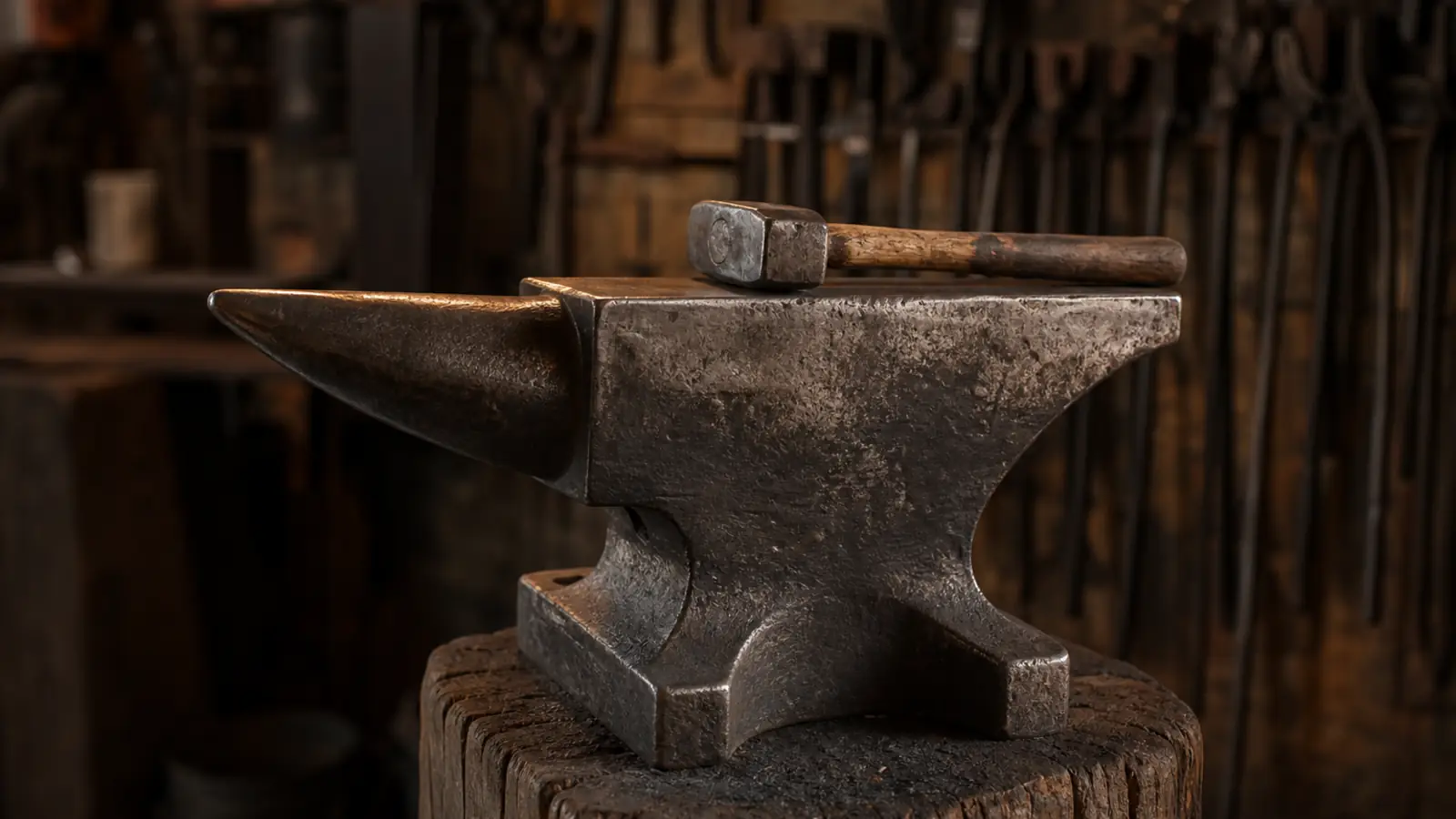
The best budget anvil for blacksmithing is a cast-steel anvil in the $2-4 per pound range - a 66 lb model handles knives and small work, 132 lb covers general forging. Avoid cast-iron ASOs; they're too soft, have dead rebound, and can crack. Never pay more than about $1.50/lb for cast iron, and always run a ball-bearing rebound test on used finds.
What a budget anvil actually buys you
A budget anvil is not the same thing as a cheap anvil. The goal is a hard steel face that returns your hammer energy back into the work, mounted on something solid, for as little money as possible. Spend too little and you end up with a soft lump that eats every blow, cracks under real forging, and has to be replaced - which costs more than buying right the first time.
For most beginners in the United States, the sweet spot is a cast-steel anvil in the $2-4 per pound range. That band gets you a usable face, a horn, a hardy hole, and enough mass to forge without the anvil bouncing around. It is worlds better than a hardware-store cast-iron "anvil," and a fraction of the price of a premium forged tool.
Two things decide whether an anvil is worth buying: what it is made of and how much it weighs. Material decides whether the face is hard enough to work steel at all. Weight decides how much of your hammer blow goes into the workpiece instead of shaking the stand. Nail both and you can forge for years on a $150-250 anvil.
Weight: buy at least 40-50x your hammer
A working anvil should weigh roughly 40 to 50 times your hammer. Swing a 2 lb hammer and you want 80-100 lb under it for efficient work. That said, a common beginner floor is about 66 lb for general blacksmithing - light enough to move and afford, heavy enough to make hooks, hardware, and small knives without frustration.
Heavier is almost always better for forging, because mass is what returns energy to the steel. A 132 lb anvil hits noticeably "deader" in the good sense, and lets you move metal faster. The tradeoff is price and portability. If you have the budget and a fixed place to mount it solidly, size up. Use the anvil weight calculator if you want to match an anvil to your hammer and stock.
| $/lb | What it means | Beginner call |
|---|---|---|
| Under $2 | Used bargain, may need cleanup | Great if the face passes rebound |
| $2-4 | Budget cast steel, new | The beginner sweet spot |
| $4-7 | Mid-tier new, better rebound | Worth it if you can stretch |
| $7-12 | Premium forged | Overkill for a first anvil |
| Cast iron (any) | ASO - too soft to forge | Do not pay over $1.50/lb |
Rate an anvil's price per pound
Two budget cast-steel anvils worth featuring
These generic types cover the two cast-steel sizes most beginners actually buy. Cast steel is not as tough as forged, and cheap imports can have soft spots or rough faces, but a decent one in the $2-4/lb band forges real work.
Cast-steel anvil 66 lb
19 x 4 x 10 in
- Weight
- 66 lb
- Material
- Cast Steel
- Hardness
- ~50 HRC
- Face (in)
- 3.9 x 9.8
- Hardy hole
- 1 in
Popular beginner weight. Ring and rebound vary by batch - test rebound with a ball bearing if you can.
Cast-steel anvil 55 lb
17 x 3.5 x 9 in
- Weight
- 55 lb
- Material
- Cast Steel
- Hardness
- ~48 HRC
- Face (in)
- 3.5 x 9
- Hardy hole
- 0.9 in
Light and portable but bounces on light stands. Bolt it down or mount to a heavy stump.
Cast-steel anvil 70 lb
20 x 4 x 10 in
- Weight
- 70 lb
- Material
- Cast Steel
- Hardness
- ~52 HRC
- Face (in)
- 4 x 10
- Hardy hole
- 1 in
A little more mass than the 66 lb for a similar price. Marketing hardness claims are often optimistic.
Cast-steel anvil 132 lb
26 x 4.5 x 12 in
- Weight
- 132 lb
- Material
- Cast Steel
- Hardness
- ~52 HRC
- Face (in)
- 4.5 x 12
- Hardy hole
- 1 in
Enough mass for confident general forging. Shipped by freight - check delivery cost, not just Prime.
Cast-steel anvil 110 lb
24 x 4.3 x 11 in
- Weight
- 110 lb
- Material
- Cast Steel
- Hardness
- ~50 HRC
- Face (in)
- 4.3 x 11
- Hardy hole
- 1 in
Middle-weight all-rounder. Verify hardy hole size matches tools you plan to buy.
Cast-steel anvil 150 lb
27 x 5 x 13 in
- Weight
- 150 lb
- Material
- Cast Steel
- Hardness
- ~54 HRC
- Face (in)
- 5 x 13
- Hardy hole
- 1 in
Great shop anvil weight. Freight only - budget for a pallet or curbside delivery.
Buying used: the rebound and flatness tests
The best budget anvils are often used ones. A tired old farm anvil with a good hard face beats a shiny new casting every time. Before you hand over cash, run two quick checks.
Rebound test. Drop a ball bearing (a 1 inch bearing or a large steel ball) onto the face from about 10 inches and watch how high it bounces. Good hardened steel returns 70% or more of the drop height. A lively 80%+ bounce is excellent. A dull thud that dies at 20-30% means a soft or cast-iron face - walk away. Test several spots; the area over the anvil's waist should be the hardest.
Face flatness. Lay a straightedge across the face and look for daylight. A little sway is normal on old anvils and is not a dealbreaker. Deep swayback, chunks missing from the edges, or a mushroomed face are harder to live with. Minor edge dings actually help - you want a few radiused edges anyway.
A clear ring is a good sign; a dead thud on a supposedly steel anvil, combined with poor rebound, points to a crack or cast iron. Avoid buying sight-unseen if you can. For the perennial "is a chunk of track good enough" question, see railroad track vs a real anvil.
Honest cheap alternatives that actually work
If even a $150 anvil is out of reach, some improvised anvils genuinely work - as long as the working surface is hard steel with real mass behind it.
- Hardened steel plate. A thick slab of medium-carbon steel (1 inch or more) bolted to a heavy stump makes a serviceable flat anvil. It has no horn or hardy hole, but the face works fine for drawing out and flattening.
- Forklift tine, mounted vertically. The classic budget champion. Stand a forklift fork on end so you forge on the thick end grain, with the mass running straight down into a stump or the ground. Rebound is excellent because the blow travels down a solid column of steel. A short section of large round or square bar (2-3 inch) works the same way.
- A large hammer or sledge head for tiny work - limited, but free if you already own one.
What does not work: rail set on its side (too little mass under the hammer), soft mild-steel plate, and anything cast iron. If you improvise, prioritize a hard face and a direct, heavy path from face to ground over having a horn.
Frequently asked questions
What is the cheapest anvil that's actually good for blacksmithing?
The cheapest genuinely good option is usually a used cast-steel or forged anvil that passes a rebound test, often under $2 per pound. Buying new, a budget cast-steel anvil at $2-4/lb is the affordable sweet spot. Avoid cheap cast-iron anvils entirely - they are soft ASOs that cost you more in wasted effort than they ever save.
Is a cast iron anvil good for blacksmithing?
No. A cast-iron anvil for blacksmithing is an anvil-shaped object (ASO): too soft to move hot steel, with dead rebound that absorbs your hammer blows instead of returning them. Cast iron is also brittle and can crack. If you already own one, use it as a bench block or stand base, but don't pay more than about $1.50 per pound for it.
How heavy should a budget anvil be?
Aim for an anvil weighing about 40-50 times your hammer. With a common 2 lb hammer, that's 80-100 lb ideally, though many beginners start on a 66 lb anvil and do fine with hooks, hardware, and small knives. Heavier anvils return more energy and move metal faster, so size up toward 132 lb if your budget and workspace allow.
How do I test a used anvil before buying it?
Drop a 1 inch ball bearing onto the face from about 10 inches. Good steel returns 70% or more of the drop height; a dull, low bounce means a soft or cast-iron face. Then lay a straightedge across the face to check for deep swayback or cracks, and test several spots - the waist should be hardest. Never buy an expensive anvil sight-unseen.
Can I use a forklift tine or steel plate instead of an anvil?
Yes, within limits. A forklift tine stood on end forges beautifully because the hammer blow travels straight down a solid column of steel, giving great rebound. A thick hardened-steel plate on a heavy stump also works for flat work. Neither has a horn or hardy hole, but both beat any cast-iron ASO for actual forging.
Last verified 2026-06. Specs, sizes and market prices change - confirm details on the retailer page before buying.