The Best Blacksmith Gloves and Apron for Beginners
Quick answer
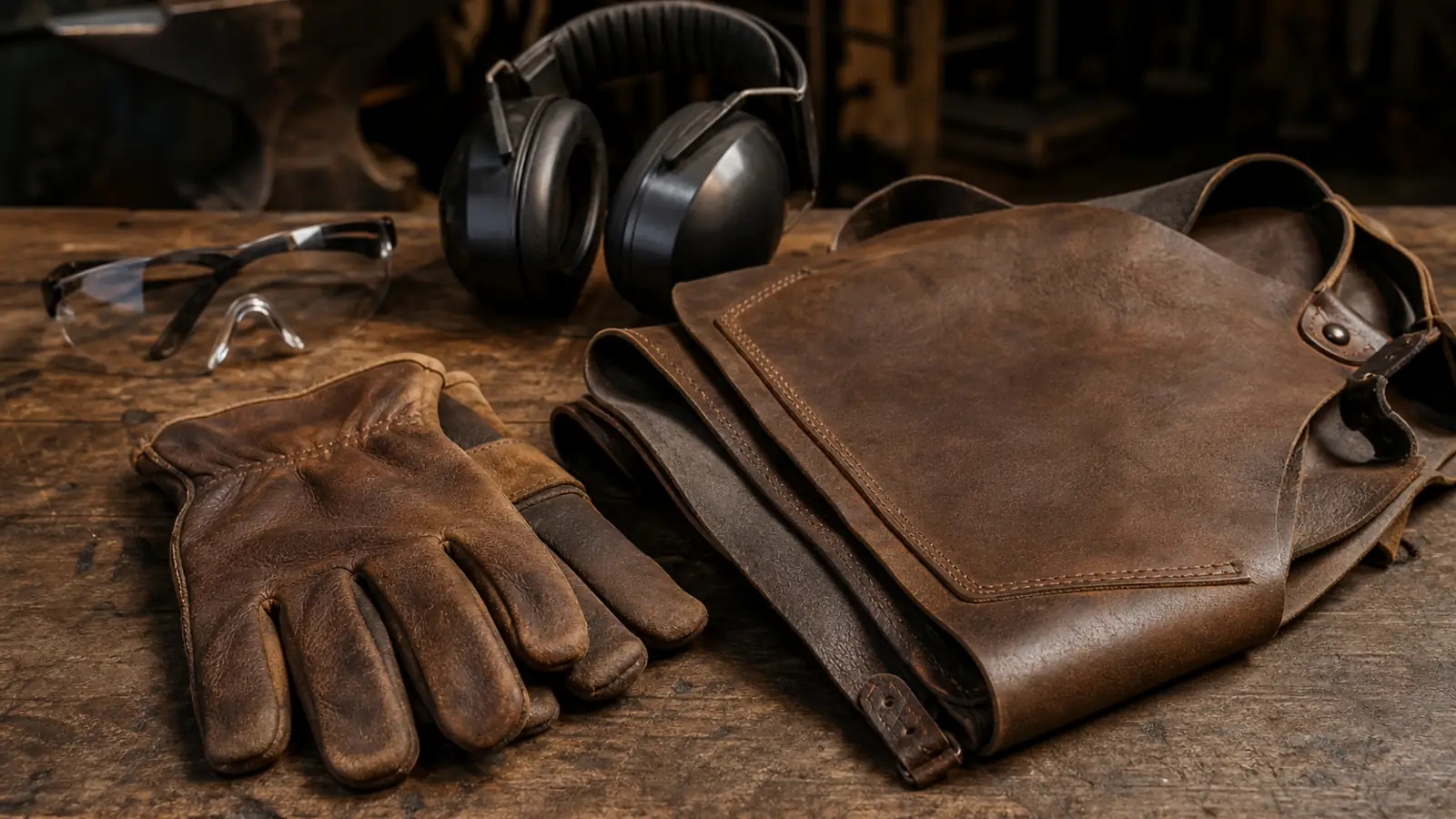
Wear a loose leather glove on your tong hand only (never a tight one that traps hot scale), a split-leg leather apron so you can straddle the anvil, and ANSI Z87+ safety glasses every minute you are in the shop. Add a shaded lens for staring into a gas forge, hearing protection, and closed leather boots. Skip synthetic anything - it melts onto skin. Many smiths forge bare-handed on the hammer hand for control.
The real job of blacksmith PPE
Most beginner blacksmithing injuries are not dramatic. They are a fleck of glowing scale that lands in a shoe, a bead of melted synthetic sleeve that fuses to a forearm, or hearing that quietly fades after a year of hammer-on-anvil ringing. Personal protective equipment (PPE) is cheap insurance against all of it, but the gear that works at a forge is not the same gear a big-box store sells for "welding" or "yard work."
The two pieces beginners ask about first are gloves and an apron. Both matter, and both are easy to get wrong in ways that make you less safe rather than more. Below is what actually works at the anvil, how to fit it, and the rest of the safety kit you should own before your first heat.
| Body part | Recommended gear | Why it matters |
|---|---|---|
| Eyes | ANSI Z87+ glasses; shaded/IR lens for gas forge | Grinding and scale throw debris; glow carries infrared |
| Hands | One loose leather glove, tong hand | Tight gloves trap hot scale against skin |
| Torso and legs | Split-leg leather apron | Blocks radiant heat and scale; lets you straddle the anvil |
| Feet | Closed leather boots, laced | Hot stock and scale roll off the anvil onto the floor |
| Ears | Plugs or muffs, NRR 25+ | Hammer-on-anvil ringing damages hearing over time |
| Clothing | Cotton or wool, no synthetics | Polyester and nylon melt and stick to skin |
| Lungs | Ventilation; respirator when grinding or burning coal | Scale dust, coal smoke, and carbon monoxide |
Gloves and apron worth buying
A forge glove and a leather apron are the two pieces of protective gear worth buying new and buying once. For gloves, prioritize loose fit and honest leather over thick "fireproof" marketing. For an apron, prioritize split-leg leather in a weight heavy enough to shrug off scale but light enough to wear for hours. Both are inexpensive next to the forge and anvil they protect you around.
Leather forge / welding gloves
14-16 in cuff
- Material
- Leather
- Handle
- Leather
Thick leather with a long cuff. Keep them loose so you can shed one fast if a hot scale gets inside - never a tight fit.
Heat-resistant forge gloves (short cuff)
short cuff
- Material
- Leather
More dexterity for tong work; less protection than long-cuff welding gloves. Many smiths forge bare-handed on the hammer hand for control.
Leather blacksmith apron
split-leg, 24 x 36 in
- Material
- Leather
Split-leg lets you straddle the anvil and move freely. Leather stops sparks and scale that melt or ignite synthetic clothing.
Split-leg forging apron (heavy hide)
split-leg, XL
- Material
- Leather
Heavier hide and more coverage for forge welding and grinding sparks. Look for adjustable cross-back straps.
Gloves: loose, leather, and often just one
The single most important glove rule in a forge is fit: your glove must be loose enough to shake off in a second. Hot scale, sparks, and the occasional bit of flux will find their way inside a cuff. A snug, well-fitted glove traps that scale against your skin and holds it there while you fumble to pull the glove off. A loose gauntlet drops the scale and falls away on its own.
Leather is the only sensible material. Skip anything with a synthetic backing, foam padding, or knit fabric that can melt or smolder. A basic split-leather or goat-grain welding-style gauntlet works well.
Here is the part beginners find surprising: many smiths forge bare-handed on the hammer hand. A glove dulls the feedback you need to control a hammer, and your hammer hand rarely touches hot metal. They wear a single loose glove on the tong hand, which holds the work and lives near the heat. Buy a pair, expect to wear one at a time, and replace them as they stiffen and char. Pair them with tongs that actually fit your stock - see our guide to blacksmith tongs for beginners - because a secure grip does more for safety than any glove ever will.
Aprons: split-leg leather, never synthetic
A forging apron does two jobs: it blocks the radiant heat pouring off hot stock and the forge, and it stops scale and sparks from landing in your lap. For that you want leather - full-grain or split cowhide, roughly 4 to 7 oz weight. Never wear a synthetic or coated-fabric apron near a forge. Under enough heat it melts, and molten synthetic sticks to skin and keeps burning.
The detail that separates a real blacksmith apron from a woodworking or barbecue apron is a split leg. A blacksmith stands and moves around the anvil, sometimes straddling the horn or a workpiece. A single-panel apron binds your knees; a split-leg design (a bib with two separate leg panels) lets you take a wide stance and move freely while still covering your thighs.
Look for cross-back or wide straps that do not slip, and enough length to cover from chest to mid-thigh - that is the zone most exposed to scale coming off the anvil face. If you are still assembling your kit, an apron slots naturally into a sensible shop setup alongside the consumables on a beginner tools list.
Beyond gloves and apron: eyes, ears, feet, and clothing
Gloves and an apron get the attention, but the gear below prevents the injuries that actually end hobbies.
- Eyes, always. Wear ANSI Z87+ safety glasses every minute you are in the shop, even when the forge is cold - grinding, wire-wheeling, and cutting throw far more debris than forging does. When you stare into a running gas forge, add a shaded or IR-rated lens (didymium or a shade 3 to 5 welding-style filter); that intense glow carries infrared that stresses your eyes over time. The forging temperature table shows how hot that bright-yellow color really is.
- Ears. A hammer ringing on an anvil is loud and repetitive. Foam plugs or muffs rated around NRR 25 or higher preserve the hearing you will want in ten years.
- Feet. Closed leather boots, laced up, no mesh sneakers. Hot stock and scale roll off the anvil and onto the floor; canvas and synthetic uppers burn through.
- Clothing. Cotton or wool only, with no rolled cuffs or open chest pockets that can catch scale. Synthetic fabrics (polyester, nylon, fleece) melt onto skin. Keep sleeves down but not baggy.
If you run a coal or coke fire instead of gas, ventilation becomes PPE too: those fires produce carbon monoxide and smoke, which is one reason many beginners start with a propane forge.
Frequently asked questions
Do I need gloves to forge at all?
Not on both hands. Many blacksmiths forge with a bare hammer hand for better control and feedback, and wear a single loose leather glove on the tong hand that holds the hot work. What you should never do is wear a tight glove, because it traps hot scale against your skin. If bare hands make you nervous, start with one loose glove on the tong hand and build confidence from there.
What kind of apron do blacksmiths wear?
A split-leg leather apron, roughly 4 to 7 oz cowhide. The split (two separate leg panels) lets you straddle the anvil and move with a wide stance instead of binding your knees like a single-panel woodworking apron. Leather is essential because it resists scale and radiant heat; synthetic and coated-fabric aprons melt and stick to skin under forge heat.
Can I wear welding gloves for blacksmithing?
Yes, a basic leather welding gauntlet works fine as a tong-hand glove, as long as it is loose enough to shake off quickly. Avoid the heavily insulated, tightly fitted high-heat gloves marketed for foundry work - they are stiff, kill your dexterity, and if they fit snugly they hold scale against your hand. Loose split-leather is the sweet spot.
What eye protection do I need for a propane forge?
Two layers. Wear ANSI Z87+ safety glasses whenever you are in the shop, because grinding and cutting throw the most debris. When you look directly into a running gas forge, add a shaded or IR-rated lens - didymium or a shade 3 to 5 welding filter - to cut the infrared glare coming off the hot interior. The forging temperature table shows how hot that yellow glow really is.
Is blacksmithing safe to do at home?
Yes, with sensible precautions. Forge in a ventilated space, keep a fire extinguisher and a bucket of water nearby, wear the PPE above, and never forge in synthetic clothing. Gas forges need ventilation and a CO detector; coal fires need even more airflow. A thought-out shop setup handles most of the risk before you ever light the forge.
Last verified 2026-06. Specs, sizes and market prices change - confirm details on the retailer page before buying.